ClickDesigns X Review Is This 3D Product Studio Really Worth $37 in 2026?
If you sell anything online, you already know the feeling. You have a good product, a decent offer, maybe even a little traffic, and then you hit the wall every seller hits sooner or later: the visuals. The logo looks flat. The boxshot looks like it was made in 2009. The ad creative takes you three evenings to build, and the result still doesn't look like the stuff your competitors put out. This ClickDesigns X review is about that exact problem and whether this tool actually fixes it.
I went through everything the vendor publishes about it, looked at how the funnel is built, and thought about it from the point of view of a regular online seller, not a trained designer. What follows is my honest take: what the software is, what you get at each price point, who should buy it, who should skip it, and where I think the real value sits.
Short version for the impatient: it's a well-priced visual toolkit with one genuinely interesting feature, the 3D Product Studio, and a funnel that has a lot of upsells. Whether you need them depends on what you sell and how much design work you do. Let's get into it.
What Is ClickDesigns X?
ClickDesigns X is a cloud-based visual engine made for people who sell things online. Think of it as a one-stop shop for the images that surround a product: logos, boxshots, covers, reports, digital mockups, product bundles, and graphics for web pages, videos, social media, emails and ads. You open it, pick a done-for-you template or start from a blank page, change what you want with point-and-click controls, and download the finished artwork.
The pitch is simple. No design skills. No freelancer. No code. If you can click and type, you can use it.
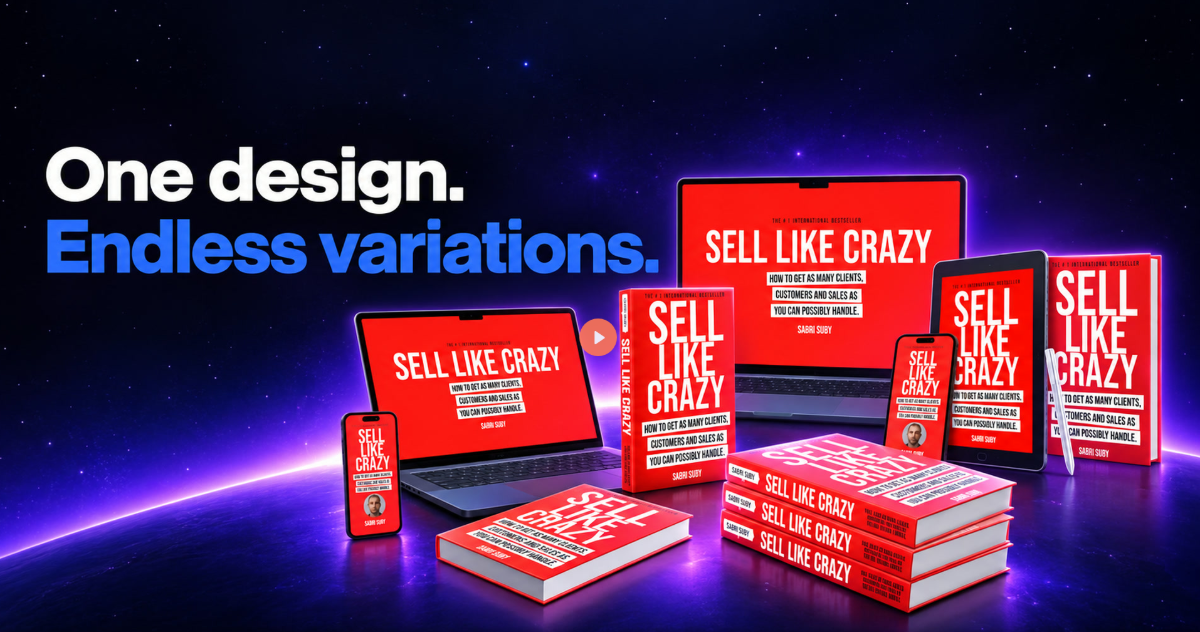
The headline feature in this version is the brand new 3D Product Studio, powered by something called MagicWrap™. You upload or build a flat design, hit one button, and the tool wraps it onto a realistic 3D object. Books, software boxes, laptops, phones, supplement tubs, pill bottles and more. The vendor's big claim is that with a single click you can get limitless variations of the same product without rebuilding or redesigning anything from scratch.
That matters more than it sounds. Anyone who has tried to produce a clean 3D mockup the old way knows how painful it is. You either learn a 3D program, or you buy a bundle of PSD mockups and fight with smart objects, or you pay somebody. A one-click wrap that keeps your artwork intact is a very practical idea.
The Numbers Behind the Product
The vendor shares some usage figures, and I'll pass them along with the usual caveat that these are the company's own numbers, not something I verified independently. According to the sales material, ClickDesigns X has more than 34,114 users across 135 countries, over 2 million designs created, and around $28 million saved in design fees. The page also says users have generated over $1 billion in sales with the visuals they made.
Take that last number with a grain of salt. Nobody can really prove that a particular boxshot caused a particular sale, and I wouldn't buy any tool because of a headline revenue figure. What I do find useful is the user count and the number of designs. A tool that people have used to make millions of designs in well over a hundred countries is clearly not a brand-new experiment. It has been tested by a real crowd, and that tends to shake out the worst bugs.
Why Other Routes to Pro Visuals Fall Short
To judge whether ClickDesigns X is worth buying, you have to look at what people do today. There are basically three routes, and each one has a problem.
The Design Apps
Tools like the big drag-and-drop design platforms are powerful, and I use them myself for plenty of things. But they're built with designers in mind. You start from a blank canvas, you spend hours learning where everything lives, and when you want a new angle or a new layout you rebuild it by hand. For a marketer who just wants a decent boxshot by tonight, that's a lot of friction.
The AI Image Generators
These look effortless right up until you try to use one for a real product. You type a prompt and get something shiny, but the product has changed shape. You generate again and the logo has vanished or turned into nonsense text. Every result is a little different from the last, which is the opposite of what you need when you're building a brand. Consistency is the whole point of product imagery, and random generation doesn't give you that.
The Freelancers
Hiring a designer works, but the process is slow. You find someone, write a brief, wait, review, ask for revisions, wait again, and then pay per job. The vendor puts a single campaign at around $2,000 in designer fees, and every new angle or new campaign means another invoice. If you launch products often, those costs stack up fast.
So the gap ClickDesigns X is aiming at is clear. It wants to be faster than learning a design app, more consistent than an AI generator, and far cheaper than a freelancer. Whether it hits all three is what the rest of this review is about.
==> Get The Full ClickDesigns X Buying <==
Key Features of ClickDesigns X
Done-For-You Templates
You don't have to start from nothing. The software ships with ready-made templates for the kinds of visuals online sellers need most. You pick one, swap in your own text and colors and images, and you're done. For beginners this is the biggest time-saver, because it removes the blank-page problem completely. You're editing, not inventing.
Point-and-Click Customization
Editing is done with simple controls instead of a full design toolbox. You click an element and change it. There are no layers panels to decode and no technical menus to dig through. If you've ever opened a professional design program and felt your stomach drop, this is the opposite experience. I'd call it deliberately limited in the right ways, because fewer options means fewer ways to make something look bad.
A Wide Range of Asset Types
This is where the "all-in-one" label earns its keep. From the same dashboard you can make logos, boxshots, covers, reports, digital mockups, product bundles, and graphics for pages, videos, socials, emails and ads. That variety is useful because most sellers don't need one thing, they need ten small things. A cover for the lead magnet. A bundle graphic for the offer. A mockup for the sales page. A few social images for launch week. Having them in one place keeps your branding consistent and saves you from paying for four different subscriptions.
The 3D Product Studio and MagicWrap™
This is the feature the whole launch is built around, and I think it deserves its reputation. You take a flat design, run it through MagicWrap™, and it gets applied to a 3D product in a single click. The list of supported product types includes books, software boxes, laptops, phones, supplement tubs and pill bottles, with more mentioned beyond that.
The part I like most is the variation. Say you've made a flat cover for your new ebook. Normally you'd want a hardcover version, a paperback version, a tablet version and a stack-of-books version for your sales page. With a 3D studio like this, you change the product type and the same artwork is wrapped again. You haven't rebuilt anything. You haven't redesigned anything. That is the kind of shortcut that quietly saves hours every month.
For physical product sellers, supplement brands and anyone selling software or digital downloads, realistic 3D visuals do real work. They make an offer feel tangible. A flat rectangle says "file", while a 3D box says "product". Shoppers read those signals without thinking about it.
Built for Speed and Repeat Use
Everything about the workflow is aimed at repeat jobs. Once your design is set, you can spin out versions for different platforms and different campaigns without starting again. If you run launches, affiliate promotions, or client work, that repeatability is probably the most valuable thing in the package.
How ClickDesigns X Works in Practice
Based on how the product is described, a typical session goes like this.
• Choose your starting point. Pick a done-for-you template or open a blank project.
• Customize it. Use the point-and-click controls to change text, colors, images and layout until it matches your brand.
• Pick your output. Decide whether you need a logo, boxshot, cover, report, mockup, bundle or a graphic for a particular platform.
• Go 3D if you want to. Send the flat design to the 3D Product Studio, choose a product, and let MagicWrap™ apply it.
• Download and use. Drop the finished visuals into your pages, videos, social posts, emails or ads.
None of that requires special training. The learning curve is closer to filling out a form than learning a program, which is exactly why a lot of non-designers will like it.
Who Is ClickDesigns X Best For?
I'd say this tool fits several kinds of buyers well.
Digital product creators and info marketers are the obvious group. If you sell ebooks, courses, software, templates or memberships, you constantly need covers, boxshots and mockups. This is basically built for you.
Affiliate marketers and JV partners will find it handy too, mainly because bonus pages, bundle graphics and review-page visuals all need to look professional. A decent bonus bundle image can lift how valuable your offer feels.
Supplement and physical product sellers can use the 3D tubs and pill bottles to create product shots before the real packaging exists, or to test different label ideas without ordering samples.
Freelancers and small agencies who make visuals for clients can use it to turn around jobs quicker. The Agency upgrade in the funnel is aimed squarely at this group, and I'll talk about it below.
Who probably shouldn't buy it? Trained graphic designers who already live in professional software and want full control over every pixel. This isn't trying to replace that kind of workflow. It's trying to give everyone else a shortcut.
Pros and Cons
What I Like
• Very beginner-friendly. Templates plus point-and-click editing means almost no learning curve.
• Wide range of outputs from one tool, from logos and covers to ad graphics.
• The 3D Product Studio with one-click MagicWrap™ is a real standout, and limitless variations from a single design is a big time-saver.
• Low entry price of $37 compared to hiring help or paying for several separate tools.
• Large existing user base in many countries, which suggests the product is stable and proven.
What Could Be Better
• The funnel has five upsells, so it's easy to overspend if you don't plan ahead.
• Template-based tools can make your work look similar to other users' work if you never customize beyond the basics.
• Advanced designers may find the point-and-click approach too limited.
• Some of the bigger claims, like the $1 billion in sales, can't be independently checked.
==> Get The Full ClickDesigns X Buying <==
ClickDesigns X Pricing and Funnel Breakdown
Let's talk money, because this is where a lot of reviews get vague. ClickDesigns X is sold through a front-end offer plus several optional upgrades. Here's the full lineup.
|
Offer |
What It Is |
Price |
|
Front End |
ClickDesigns X |
$37 |
|
OTO 1 |
ClickDesigns X Maximizer |
$97 |
|
OTO 2 |
ClickSocials X |
$77 |
|
OTO 3 |
3D Design Studio X |
$97 |
|
OTO 4 |
ClickDesigns X Agency |
$197 |
|
OTO 5 |
ClickDesigns AI Turbo |
$67 |
|
Complete Bundle |
ClickDesigns X Bundle |
$397 |
A quick note before I go through them. I'm describing the upgrades based on their names and how upsells like these are normally positioned. Exact feature lists can change, so always check the official sales page before you decide.
Front End: ClickDesigns X ($37)
This is the core product and the one everyone gets. It includes the template library, the point-and-click editor and the ability to create the range of visuals I covered above. For $37, that's a fair price. Honestly, a single freelance logo costs more than this. If you only ever buy one thing from the funnel, this is the one that gives you a working tool.
OTO 1: ClickDesigns X Maximizer ($97)
As the name suggests, the Maximizer is meant to expand what the front-end version can do, typically with more templates, more assets and more room to create. It's the logical first upgrade for anyone who plans to use the software heavily. If you're going to be making visuals every week, it may be worth it. If you only need a handful of graphics for one project, you can wait and see how much you actually use the base version first.
OTO 2: ClickSocials X ($77)
This one is clearly about social media content. If your marketing runs on Instagram, Facebook, Pinterest or short-form video, a dedicated social toolkit can save a lot of time, since every platform wants different sizes and styles. It's a niche upgrade, so it makes sense mostly for people who post often. If social isn't a main traffic source for you, skip it.
OTO 3: 3D Design Studio X ($97)
Given how much of the launch is built around 3D, this upgrade will interest anyone who loves the MagicWrap™ idea and wants more of it. It likely expands the 3D side of the platform. I'd say this is the most tempting upgrade for product sellers, especially if you work with physical products like supplements or you create lots of boxshots and device mockups. Try the 3D features in the base product first and see how they fit your workflow before you commit.
OTO 4: ClickDesigns X Agency ($197)
The Agency license is for people who want to use the tool for other people's businesses. If you plan to sell design services, create visuals for clients or run a small studio, this is the one that makes it legal and practical to do so. At $197 it's the priciest single upgrade, but a single client project could cover the cost. If you're not planning to offer services, you don't need it.
OTO 5: ClickDesigns AI Turbo ($67)
The final upsell adds an AI layer to the mix. I'd treat this as a nice-to-have. AI assistance can speed up idea generation and variations, but the core strength of this product is the controlled, repeatable approach that avoids the randomness of prompt-based tools. Skip it at first and add it later if you find yourself wishing for more speed.
Complete Bundle: ClickDesigns X Bundle ($397)
If you already know you want everything, the bundle packages the whole funnel together for $397. Add up the individual prices ($37 + $97 + $77 + $97 + $197 + $67) and you get $572, so the bundle saves you about $175. That's a decent discount, but only if you'd really use every piece. Buying the whole stack out of excitement and then using one-third of it is the most common way people waste money on software.
Which Option Should You Choose?
Here's how I'd think about it, depending on who you are.
If you're a beginner or on a tight budget, start with the $37 front end and nothing else. Use it for a week. See which visuals you actually make and where you feel limited. Then upgrade only for the specific thing you keep wanting.
If you sell physical or 3D-friendly products, take the front end first and consider 3D Design Studio X once you've tried MagicWrap™ for yourself.
If you run an agency or sell design services, the Agency upgrade is where the real return is. The combination of the front end, the Maximizer and the Agency license probably covers most of what you'd need.
If you already know this will be a daily tool, the $397 bundle is the cleanest way to get everything at a lower combined price.
The general rule I follow with any software funnel is to buy the first thing, use it for real, and only then spend more. You can almost always add upgrades later, but you can't take back a purchase you didn't need.
==> Click Here to Get ClickDesigns X at a Discount Price <==
Real-World Ways to Use ClickDesigns X
Features are nice, but what do people actually do with a tool like this? Here are a few practical scenarios that show where it can pay for itself.
Launching a New Digital Product
Imagine you're about to release a new ebook or course. You need a cover, a boxshot for the sales page, a bundle image for the order form, a few social graphics for launch week, and a banner for your email sequence. Normally that's a small project in itself. With a template-based tool, you build the base design once and reuse it across all of those formats. The look stays consistent, and you spend your time on the offer instead of the artwork.
Promoting Affiliate Offers
If you promote other people's products, you're always competing for attention on review pages, bonus pages and emails. A polished bonus bundle graphic or a clean mockup of what the buyer receives makes your page look more trustworthy. It also helps you stand out from the dozens of other affiliates promoting the same launch with the same stock images.
Testing Packaging Ideas
For supplement or physical product sellers, being able to wrap a label onto a 3D tub or pill bottle in one click is handy long before you place a print order. You can compare two label designs, try a different color scheme, or show a prototype to a partner without spending money on samples. It's a quick, cheap way to get an early reaction.
Serving Clients
Freelancers and small agencies can use the same workflow to produce logos, mockups and ad graphics for customers faster than they could by hand. The more repeat work you do, the more the time savings add up, and that's why the Agency license exists in the funnel.
Is ClickDesigns X Worth the Money?
Let's do the plain math. The vendor says a single campaign's worth of visuals can run around $2,000 when you hire a designer. Even if you only paid a quarter of that for a smaller project, you'd still spend more on one job than the $37 front end costs. And with a freelancer, the next campaign means paying again, while with a tool you own, the next campaign is just more of your own time.
The reverse side of that math matters too. If you only need two or three graphics a year, a one-time freelancer fee or a free design app may be perfectly enough. A tool only saves money when you use it. So the real question isn't whether $37 is cheap. It's whether you produce visuals often enough to make the purchase pay off. If you launch, promote or sell regularly, the answer is almost certainly yes.
Tips to Get the Best Results
Template tools are only as good as the person using them, so here are a few habits that help.
• Customize beyond the defaults. Change colors, fonts and images so your work doesn't look like everyone else's.
• Keep your branding consistent. Reuse the same palette and style across your cover, boxshot, bundle and ads so your offer feels like one product.
• Start with the flat design. Get the artwork right first, then send it to the 3D Product Studio. A strong flat design wraps into a strong 3D one.
• Make variations early. Since a new product type is a single click away, test a few mockup styles on your sales page and see which one gets more attention.
• Plan your upgrades. Write down what you actually need before you see the upsell pages, so you don't buy on impulse.
None of this is complicated. It's mostly about treating the tool as a fast production line for ideas you've already thought through, not as a magic button that thinks for you.
ClickDesigns X vs. the Alternatives
It helps to see where this tool sits next to what you might already be using.
Against the big design apps, ClickDesigns X is simpler and narrower. You won't get the endless flexibility of a full design platform, but you also won't spend an afternoon learning menus. If your needs are product-focused visuals, that trade is a good one.
Against AI image generators, the main advantage is control. When you need your product to look the same every time, with your logo intact and your cover untouched, a template-and-wrap workflow beats random generation easily. AI tools are great for brainstorming and background art, but they're a weak choice for exact product imagery.
Against freelancers, the big advantage is speed and cost. A tool that lets you generate unlimited variations of a design once you own it changes the math completely. You pay once instead of per job. What you give up is the custom, one-of-a-kind creative work a skilled human designer can offer. For most sales-page visuals, though, you don't need that.
My Honest Verdict on ClickDesigns X
I'll be direct. ClickDesigns X isn't going to turn you into a designer, and it isn't trying to. What it does is remove the most annoying parts of producing product visuals: the learning curve, the waiting, the invoices, and the randomness. The 3D Product Studio with one-click MagicWrap™ is the piece that makes it feel current rather than like yet another template library.
At $37, the front end is priced low enough that the risk is small for anyone who regularly needs boxshots, covers, mockups or ad graphics. The upgrades are where you need to be careful. There are five of them plus a bundle, and not everyone needs more than the base package. Pick based on what you really do, not on how exciting the sales page makes things sound.
My recommendation: if you sell online and visuals are a recurring headache, grab the front end, try it on a real project, and decide on upgrades after that. If you offer design services, look seriously at the Agency version. If you're a professional designer with a polished workflow already, you can safely pass.
One last thought. The best software purchases are the ones that remove a recurring annoyance from your week, and for a lot of online sellers, creating decent visuals is exactly that kind of annoyance. If ClickDesigns X cuts that work from hours to minutes, the $37 pays for itself the first time you skip a design invoice or a late-night editing session. That's the standard I'd hold it to, and based on what it offers, I think it has a fair shot at meeting it.
Ready to see it for yourself? You can check the current offer and get started with ClickDesigns X through the link in this article.
Frequently Asked Questions
Do I need design skills to use ClickDesigns X?
No. You choose a template or start fresh, then edit with point-and-click controls. No design experience, coding or freelancer needed.
What can I create with ClickDesigns X?
Logos, boxshots, covers, reports, digital mockups, product bundles, and graphics for pages, videos, socials, emails and ads.
What is MagicWrap™ in the 3D Product Studio?
It is a one-click feature that wraps your flat design onto 3D products such as books, software boxes, laptops, phones, supplement tubs and pill bottles.
How much does ClickDesigns X cost?
The front end is $37. Optional upgrades range from $67 to $197, and the complete bundle is $397.
Do I need to buy the upgrades?
Not at first. The $37 front end gives you a working tool, so try it before deciding on any upsells.