Puzzle Arsenal Review Is This Puzzle Book Publishing Bundle Worth Your Money?
Introduction
If you have spent any time looking at low-content publishing, you already know the puzzle book niche keeps coming up. Word searches, mazes, logic grids, mystery puzzles – people buy them for road trips, for retirement, for rainy afternoons, and for the simple pleasure of switching their phone off for an hour. The demand is steady, and that is exactly why so many new publishers want a piece of it.
The problem is the work. Creating puzzles by hand takes forever, designing clean interiors takes skill, and a lot of beginners give up before their first book ever reaches a store page. That is the gap Puzzle Arsenal is trying to fill, and it is the reason I sat down to write this honest Puzzle Arsenal review.
In the sections below, I will walk through what the product is, what the front-end offer includes, how the three optional upgrades (OTOs) fit in, who will actually benefit, and where you should stay cautious. No hype, no empty promises – just a practical look so you can decide for yourself.
What Is Puzzle Arsenal?
Puzzle Arsenal is a puzzle creation and publishing toolkit made for people who want to produce puzzle book interiors without building every page from scratch. At its core, it gives you a foundational collection of puzzle assets, templates, and creation tools so you can move from an idea to a finished interior much faster than you could on your own.
Think of it as a workshop that already has the benches, tools, and raw materials laid out. You still have to decide what to build, but you are not starting by chopping down a tree. For a beginner, that difference is huge. For an experienced publisher, it can mean producing more books in the same amount of time.
Who Is It Built For?
The product mainly speaks to three types of people. First, there are complete beginners who like the idea of self-publishing but have no design or puzzle-making background. Second, there are side-hustlers who want to add puzzle books to an existing publishing routine. Third, there are small creators and teachers who simply want printable puzzle content for their own audience.
If you fit into one of those groups, the idea behind Puzzle Arsenal will probably feel relevant. If you are hoping for a button that prints money while you sleep, this is not that, and no honest tool ever is.
👉 Visit Official Puzzle Arsenal Website and Claim 30% Discount Today
Why the Puzzle Book Niche Still Makes Sense
Before judging any tool, it helps to ask whether the market behind it is worth entering. Puzzle books have a few qualities that make them attractive to independent publishers.
They are repeat-purchase products. Someone who enjoys one puzzle book usually wants another, and often another after that. They also work well as gifts, which means demand spikes around holidays and birthdays. Unlike a novel, a puzzle book does not need a gripping plot or a famous author name. It needs clean pages, solvable puzzles, and a clear promise on the cover.
There is also plenty of room for variety. Large-print puzzles for seniors, themed puzzles for kids, brain-teasers for commuters, and mystery-style puzzles for adults who love crime stories all attract different readers. A publisher who understands this can build a small catalog instead of relying on one single title.
Of course, competition exists. Plenty of people had the same idea, and the marketplaces are crowded. That is why variety and quality matter so much, and it is also why tools that help you diversify your interiors can be genuinely useful rather than just a nice extra.
What You Get Inside the Front-End Offer
The front-end product, the Puzzle Arsenal Core Package, is the foundation of everything else. It is priced access to a collection of puzzle assets, templates, and creation tools designed to kickstart your publishing journey. Let me break that into the two parts that matter most.
Puzzle Assets and Templates
Assets are the ready-made building blocks – the puzzle content and page elements you can drop into your own books. Templates are the layouts that hold everything together. Together, they take care of the part that most newcomers struggle with: making the pages look consistent and professional.
A good template saves you from fiddling with margins, spacing, and page order for hours. When the layout is already sorted, you can focus on the creative side, such as choosing a theme, writing a catchy title, and planning how many puzzles each book should contain.
Creation Tools
The creation tools are what turn the raw materials into finished interiors. Instead of designing every grid by hand, you work with tools that help you build and arrange puzzles faster. This is where the time savings really show up, because repeating the same manual steps for dozens of pages is exactly what drains motivation.
I would always recommend testing the tools with a small project first. Build a short sample book, check how the pages look on screen, and only then scale up. That way you learn the workflow without risking much of your time.
Puzzle Arsenal OTOs: Upgrade Paths Explained
When you invest in Puzzle Arsenal, you also have the option to expand your capabilities through its optional upgrade paths (OTOs). Based on the official release structure, here is a breakdown of the core offer and the accompanying OTOs:
• Front-End Offer - Puzzle Arsenal Core Package: Priced access to the foundational collection of puzzle assets, templates, and creation tools to kickstart your publishing journey.
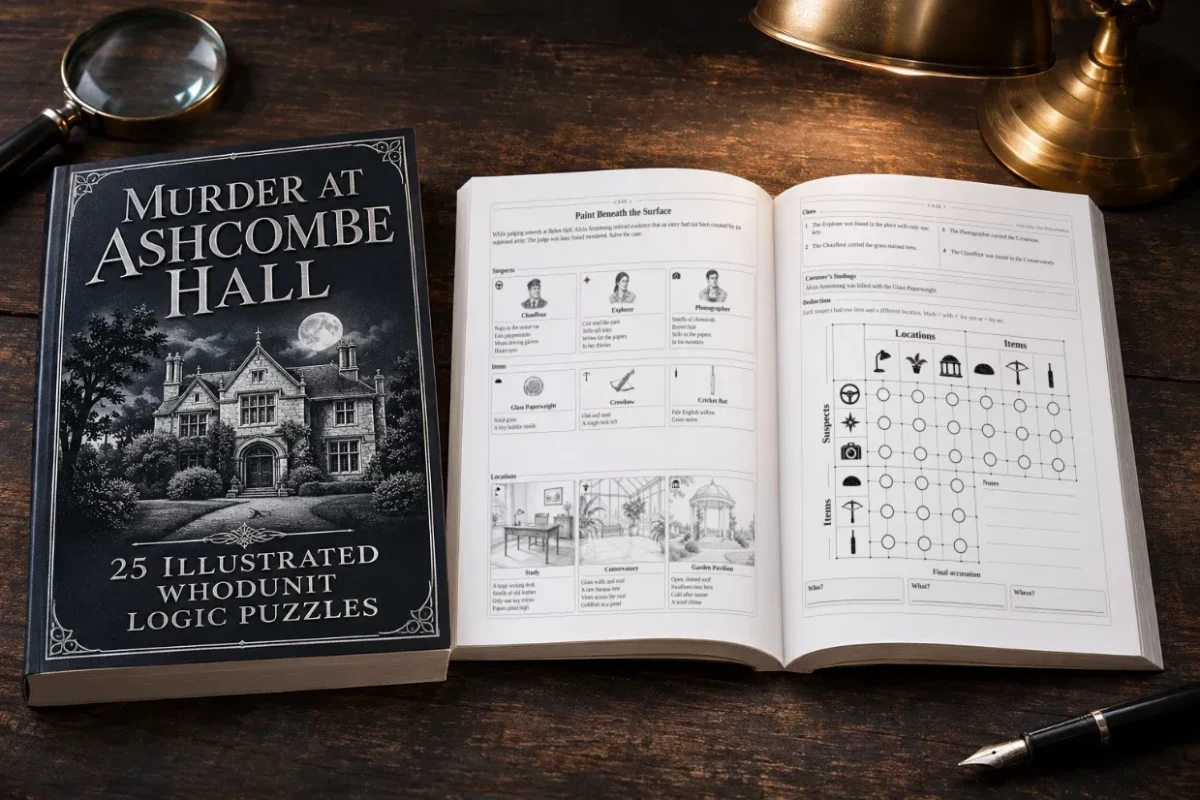
• OTO 1 - Puzzle Arsenal: Guilty by Deduction ($27.00): This upgrade dives deep into narrative-driven deduction and mystery-style logic games. It is perfect for publishers who want to target the booming market of adult mystery and crime-solving puzzle books.
• OTO 2 - Puzzle Arsenal: Connection Quest ($37.00): This expansion focuses on associative grid games, pattern recognition, and connection-based challenges that test lateral thinking. It adds incredible variety to your book layouts.
• OTO 3 - Puzzle Arsenal: Elimination Game ($37.00): A specialized module centered around elimination-style logic puzzles, grid cross-outs, and tactical deduction matrices that advanced puzzle fans adore.
Note: While the front-end product gives you a solid foundation, grabbing the OTOs allows you to diversify your puzzle book interiors significantly, helping your publications stand out in crowded marketplaces.
Let me add some plain-language context to each upgrade, because the names alone do not tell you much.
OTO 1: Guilty by Deduction
This one is about storytelling combined with logic. Instead of a plain grid of words, the reader works through a small mystery, gathering clues and ruling out suspects until the case is solved. Adults who enjoy detective novels and crime shows tend to love this format, which makes it a strong fit if you want to aim at a more mature audience than the typical kids-and-family puzzle shelf.
OTO 2: Connection Quest
Connection Quest leans on association and pattern spotting. Readers have to see how items relate to one another, which pushes them to think sideways rather than follow a fixed formula. These puzzles feel fresh next to standard word searches, and they are great for mixed-puzzle books where you want the reader to keep turning pages.
OTO 3: Elimination Game
Elimination puzzles are the classic cross-it-out logic grids. Solvers use clues to eliminate possibilities one by one until only the correct answer remains. Players who enjoy this style are often seasoned puzzle fans, so a book built around it can win loyal readers who come back for the next volume.
Do You Need All Three Upgrades?
Not necessarily. The front-end package is meant to stand on its own, and plenty of people will be happy starting there. The upgrades make the most sense when you already know which audience you are targeting. If you want to publish mystery-themed books, OTO 1 is the natural pick. If you want variety inside every book, OTO 2 and OTO 3 add useful flavors.
A sensible approach is to start with the core package, publish one or two books, see what feels natural to you, and then upgrade when a specific need appears. Buying everything on day one is possible, but it is not always the smartest use of a limited budget.
👉 See the Current Puzzle Arsenal Creator Price and Bonuses
How to Use Puzzle Arsenal Step by Step
Here is a simple workflow that makes sense for most beginners. Adjust it to fit your own style.
Step 1: Pick a Clear Audience
Decide who the book is for before you open any tool. Seniors who want large print, kids who love animals, commuters who need quick brain-teasers – each audience needs a different tone and difficulty level. A focused book almost always beats a vague one.
Step 2: Choose Your Puzzle Types
Select the puzzle formats that suit your audience. A relaxing book might mix gentle puzzles, while a challenge book could lean on deduction and elimination styles. This is where the upgrade modules can help if you want more variety.
Step 3: Build and Arrange the Interior
Use the templates and creation tools to assemble your pages. Keep the layout clean, make sure instructions are easy to follow, and place easier puzzles at the start so readers feel successful early. Good pacing keeps people engaged.
Step 4: Check Quality Carefully
Always solve a few puzzles yourself and proofread every page. A single unsolvable puzzle can lead to a bad review, and reviews matter a great deal in crowded marketplaces. Quality control is the step many beginners skip, and it is the one that protects your reputation.
Step 5: Prepare Your Cover and Listing
The interior is only half the story. A clear cover, a strong title, and an honest description are what convince a browsing customer to click. Spend real time here, because even the best interior will not sell if nobody notices the book.
Pros and Cons of Puzzle Arsenal
No product is perfect, so here is a balanced view.
What I Like
• Saves time: Ready-made assets and templates remove a huge chunk of manual work.
• Beginner friendly: You do not need design or puzzle-writing experience to get started.
• Room to grow: The optional upgrades let you add new puzzle styles as your catalog expands.
• Variety potential: Deduction, connection, and elimination formats help your books feel different from the usual word searches.
What to Watch Out For
• Upsells add up: The OTOs increase the total investment, so decide carefully what you actually need.
• Results depend on you: A tool can speed up creation, but marketing, covers, and quality control are still your job.
• Crowded marketplaces: Standing out takes effort, and no toolkit can guarantee sales.
• Pricing may change: Always confirm the current price and details on the official page before buying.
Puzzle Arsenal vs. Making Puzzles Manually
Some people ask whether it is better to build everything yourself. In theory, you could create every puzzle by hand, design every grid in a graphics program, and lay out each page one at a time. In practice, that approach is slow, and slow often means unfinished.
The biggest difference is consistency. When you work manually, small mistakes creep in – a misaligned grid here, an inconsistent font there. A template-based toolkit keeps the look uniform from the first page to the last, which gives your book a more polished feel. It also makes it much easier to produce a second and third book in the same style.
That said, doing things manually gives you full creative control. If you love designing and have the time, you may enjoy it. For everyone else, a toolkit that handles the repetitive work is simply a more realistic way to publish regularly.
Puzzle Book Ideas You Can Create
One common question is what to actually make once you have the tools. Here are a few directions that work well with the puzzle styles included in the Puzzle Arsenal ecosystem.
Mystery Case Files for Adults
Short detective stories where the reader deduces the culprit from a set of clues fit naturally with the deduction module. Give each case a fun title and a simple difficulty rating, and you have a collection that feels like a mini crime-solving adventure.
Brain Training Workouts
Combine connection and elimination puzzles into a themed brain-workout book. Readers who like to stay mentally sharp often prefer this kind of mix, and a progressive difficulty curve keeps them coming back.
Travel and Waiting-Room Puzzles
Compact books with short, quick puzzles are perfect for flights, commutes, and waiting rooms. Smaller trim sizes and lighter puzzles suit this audience well.
✅ Yes, Show Me the Puzzle Arsenal Creator Deal and Bonuses
Common Mistakes Beginners Should Avoid
The first mistake is publishing too fast without checking the puzzles. Even a small error can frustrate a reader, and frustrated readers leave low ratings. Take the extra hour to test your content.
The second is ignoring the audience. A book that tries to please everyone usually pleases no one. Pick a clear reader and write for them.
The third is neglecting the cover and title. People really do judge a book by its cover, especially in a marketplace full of similar products. Invest time in making the front of your book look clear and inviting.
Finally, do not expect overnight success. Most publishers see their results grow slowly as they add more titles and learn what their readers like. Patience and consistency are far more important than any single tool.
Who Should Skip Puzzle Arsenal?
If you are not willing to spend time learning the workflow, proofreading your puzzles, and learning basic marketing, this is probably not for you. The same goes for anyone expecting instant income. Publishing is a slow-build business, and the people who succeed treat it like a small project, not a lottery ticket.
It may also be unnecessary if you already own a complete puzzle-making setup that you are happy with. In that case, the upgrade modules might be more interesting than the core package, but even then, compare them against what you already have.
Tips to Get the Most Out of Puzzle Arsenal
Start small. One well-made book is worth more than five rushed ones. Learn from that first project, then improve with each new title.
Mix puzzle types thoughtfully. Readers like variety, but too many styles in one book can feel messy. Choose a theme and stick to it, such as a mystery collection or a brain-training workout.
Study your competition. Look at the bestselling puzzle books in your chosen niche and note what they do well, from cover design to page count to difficulty progression. Then aim to do one or two things better.
Think in series. A reader who enjoyed Volume 1 will happily buy Volume 2. Using the same template and style across a series saves time and builds a recognizable brand.
Be honest in your listings. Describe exactly what the book contains, including difficulty level and puzzle count. Honest descriptions lead to happier customers and better reviews.
Is Puzzle Arsenal Good Value for Money?
Value is really about time. If the core package saves you many hours of design and puzzle-building, it can pay for itself quickly, especially if you plan to publish more than one book. The tools matter less than the number of finished, quality books they help you produce.
The OTOs are better judged individually. Each one costs extra, but each also unlocks a specific kind of puzzle that might match your audience perfectly. If a module clearly supports a book idea you already have, it is easier to justify. If you are only buying because it is on offer, it is worth pausing and thinking again.
As always, check the official sales page for the latest pricing, bonuses, and any refund policy before you decide.
Final Verdict: Puzzle Arsenal Review
One last piece of advice: treat your first book as a learning experience rather than a final exam. Every publisher starts somewhere, and the early titles teach you what readers respond to, which puzzle types you enjoy making, and how to price and present your work. With each new book, the process gets faster, the quality improves, and the whole venture starts to feel less like guesswork and more like a skill you genuinely own.
After going through the structure, the core package, and the three upgrade paths, my view is simple. Puzzle Arsenal looks like a practical shortcut for people who want to publish puzzle books without drowning in design work. The foundation gives you what you need to start, and the OTOs – Guilty by Deduction, Connection Quest, and Elimination Game – let you widen your catalog with more advanced and more varied puzzle styles.
It is not magic, and it will not replace good planning, careful proofreading, and smart marketing. But for beginners and busy publishers who want to save time and offer readers something more interesting than another standard word search, it is well worth a serious look.
If the puzzle niche appeals to you, start with the core package, publish your first book, and let real results guide your next upgrade. That patient, step-by-step approach is the surest way to get value from any toolkit.
Frequently Asked Questions (FAQs)
1. What is Puzzle Arsenal?
It is a puzzle creation toolkit with assets, templates, and tools that help you build puzzle book interiors faster.
2. Do I need design skills to use it?
No. The templates and tools are meant to help beginners create clean, professional pages without design experience.
3. Are the OTOs required?
No. The core package works as a foundation. The upgrades simply add more puzzle styles and variety.
4. How much do the OTOs cost?
Guilty by Deduction is $27.00, while Connection Quest and Elimination Game are $37.00 each.
5. Can Puzzle Arsenal guarantee sales?
No tool can. Your results depend on book quality, covers, niche choice, and marketing effort.