Pin2Profit AI Review Can This Pinterest Tool Really Turn Pins Into Affiliate Income?
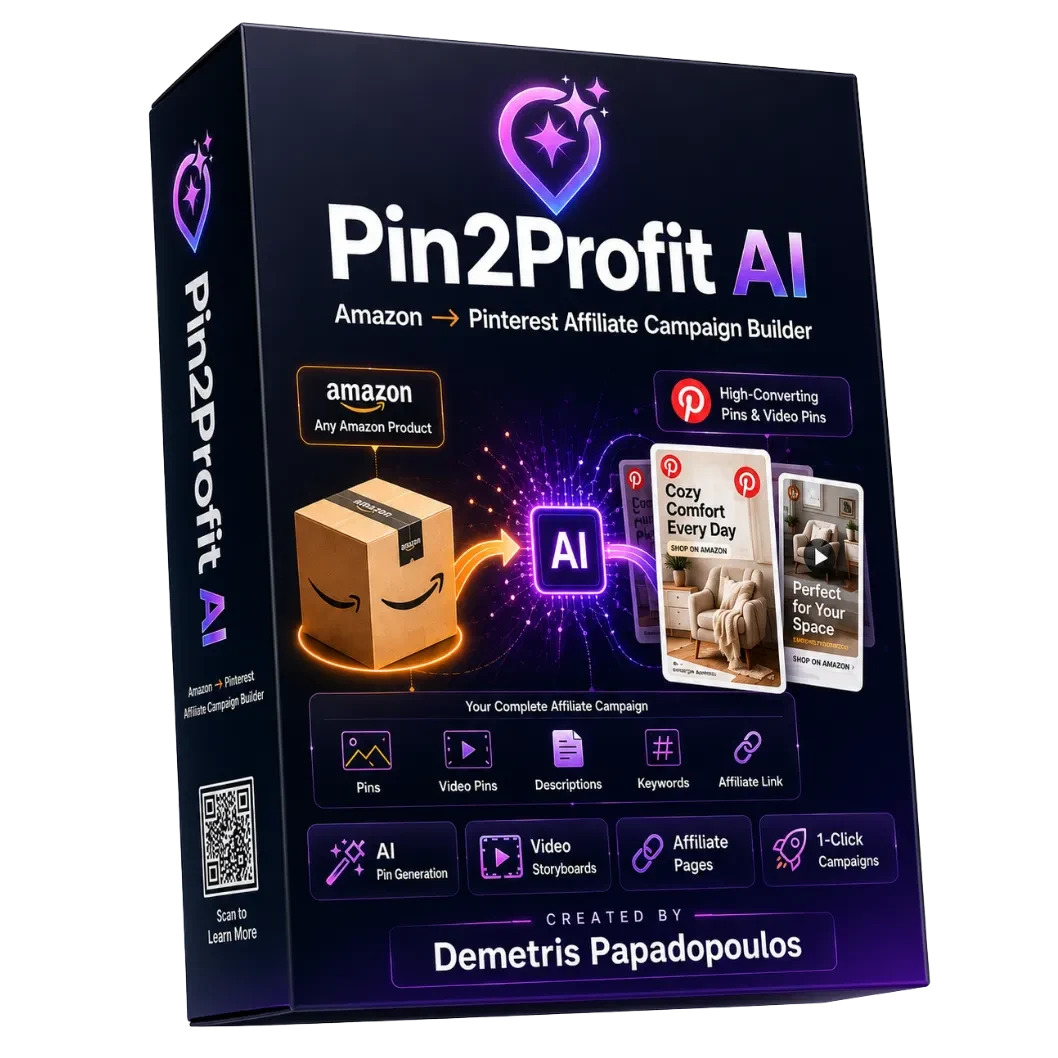
Pinterest is one of those platforms that people either swear by or completely ignore. Marketers who understand it know that a single well-made pin can keep sending visitors to an offer for a long time after it is posted. Everyone else sees a place for recipes and wedding ideas and moves on. The gap between those two groups is huge, and it is exactly where a new tool called Pin2Profit AI is trying to land.
In this Pin2Profit AI Review, I am going to break down what the software is, what you get at every level of the funnel, how much it costs, who it is built for, and where you should be careful. I will keep the language simple and the opinions honest. If you are thinking about buying, I want you to finish this article knowing exactly which parts you need and which parts you can skip.
One note before we start. All the product details in this review come from the official funnel information. I am not going to invent features, promise income numbers, or tell you that any tool can make money for you on autopilot. No software can promise that. What a good tool can do is remove the slow, boring, repetitive work so you can spend your time on the things that actually move the needle. Let us see whether Pin2Profit AI does that.
What Is Pin2Profit AI?
Pin2Profit AI is a software product built around Pinterest marketing, with a strong focus on affiliate promotion. In simple terms, it uses AI to help you create pins, connect them to affiliate pages, and, if you choose the higher levels, go deeper into trends, video pins, paid ads, and even client work.
The core software, which is the front-end offer, handles pin generation for one Pinterest account and gives you one affiliate page. From there, the rest of the funnel adds extra layers. There is a Pro Suite for more accounts and automation, an Intelligence Toolkit for research, a done-for-you pack, a paid ads training package, and an agency package for people who want to sell Pinterest services to clients.
So rather than being one single tool, Pin2Profit AI is better seen as a system with a small entry point and several optional upgrades. That structure matters, because what you really need depends on your goals. A beginner who just wants to test Pinterest has very different needs from someone planning to run an agency.
Why Pinterest Is Worth Your Attention
Before judging the software, it helps to understand why anyone would build a business around Pinterest in the first place.
Pinterest works more like a search engine than a social feed
On most social platforms, a post gets its moment and then disappears down the feed. Pinterest behaves differently. People go there to search for ideas, products, and inspiration, and pins can keep surfacing in search results long after they were first published. For affiliate marketers, that means a pin you create today may keep working for you for a long time, instead of expiring in a day.
People on Pinterest are often ready to act
Many users come to Pinterest while they are planning something: a home project, a purchase, a trip, a gift, a new routine. That planning mindset is useful for anyone promoting products. You are not interrupting someone who is scrolling for fun. You are showing up while they are already looking for ideas.
Visual content suits product promotion
Pinterest is built on images and short videos. Products, tutorials, lists, and before-and-after ideas all fit naturally. If you can create an eye-catching pin with a clear message, you can send people straight to an offer or a review page.
The catch: it takes a lot of pins
Here is the honest part. To do well on Pinterest, most people need to post pins consistently and test different designs, titles, and topics. Making all of those by hand in a design tool takes hours. That workload is the reason many beginners give up in the first month, and it is the pain point Pin2Profit AI claims to fix.
How Pin2Profit AI Works
The basic idea behind the software is easy to follow. You choose a product or topic, the AI generates pins for it, and those pins point to an affiliate page. Let me walk you through the flow as it is described in the front-end offer.
Step 1: Choose what you want to promote
Everything starts with a product or niche. This could be an affiliate offer, a seasonal topic, or something that is evergreen. The better your choice here, the better everything else will work, so do not rush it.
Step 2: Generate pins with AI
The core software includes pin generation. Instead of opening a design app and building each pin from scratch, you let the AI do the first draft. You can then review it, adjust it if needed, and prepare it for posting.
Step 3: Send traffic to an affiliate page
The front end includes one affiliate page. That page gives your pins a place to send people, rather than dropping visitors on a random link. A dedicated page can present an offer in a cleaner way and help the visitor understand why they should click.
Step 4: Publish on your Pinterest account
The entry-level package supports one Pinterest account, which is perfectly fine for testing. You post, you watch what happens, and you decide what to do next.
Step 5: Scale if the results justify it
This is where the upgrades come in. If you see traction, you can add more accounts, unlock automation, bring in trend research, or even move into paid promotion. If you do not, you have only spent a small amount to find out.
The Pin2Profit AI Funnel, Level by Level
This is the part most buyers care about, so let us go through every level carefully. I will explain what each piece includes, who it suits, and whether it feels essential or optional.
Front End: Pin2Profit AI Core Software ($27)
The front end costs $27 and includes pin generation, support for one Pinterest account, and one affiliate page. That is the foundation.
At this price, it works well as a low-risk way to try the concept. If you are new to Pinterest, or you have never tested it for affiliate offers, this is the version that lets you get your feet wet. You will not have unlimited accounts or advanced features, but you will have enough to create pins, publish them, and see how your first offer performs.
My view: for most beginners, this is the right place to start. Start small, learn the platform, and upgrade only when you have a reason to.
OTO 1: Pro Suite ($47)
The Pro Suite costs $47 and expands the front end in a few important ways. You get a video pin creator, support for 10 accounts, unlimited affiliate pages, and automation features.
Video pins matter because Pinterest has been pushing video content, and moving images tend to stand out among static ones. Being able to create them inside the same tool saves you from learning a separate video editor.
The jump from one account to ten is the biggest change. If you want to promote different niches, test multiple strategies, or manage accounts for more than one brand, a single account becomes limiting very quickly. Unlimited affiliate pages also remove the cap on how many offers you can promote.
Who should buy it? Anyone who is serious about growing beyond a simple test. If you already know you plan to promote several offers or run several accounts, this upgrade is probably worth it. If you are still unsure about Pinterest, you can wait.
OTO 2: Intelligence Toolkit ($37)
The Intelligence Toolkit costs $37 and includes Pinterest Trends, a Keyword Engine, and an Intelligence dashboard.
This is the research layer. Good Pinterest marketing is not only about making pretty pins. It is about making pins for topics people are actually searching for. Trend data tells you what is rising, and keyword research tells you which phrases to use in titles and descriptions so your pins can be found.
Think of it as the difference between guessing and knowing. Without research, you might spend a week creating pins around a topic nobody is looking for. With it, you can pick topics with real demand and write around the language that people actually use.
Who should buy it? Anyone who wants to build a lasting strategy instead of posting at random. If you like data and enjoy planning your content, this upgrade is a strong addition. If you prefer to move fast and test as you go, it can wait.
OTO 3: DFY Suite ($27)
The DFY Suite costs $27 and gives you done-for-you templates along with evergreen and seasonal product lists.
DFY means done for you, and the value here is speed. Templates give you ready-made starting points, and the product lists remove one of the hardest decisions for beginners: what should I promote? Evergreen products can keep selling all year, while seasonal products let you take advantage of busy times such as holidays and special events.
For $27, this is one of the more affordable upgrades, and it suits people who feel stuck at the idea stage. If you already have niches and offers in mind, you may not need it. If you tend to sit there wondering what to promote, it could save you a lot of time.
OTO 4: Paid Ads Training ($67)
The Paid Ads Training costs $67 and includes Pinterest ads training, an AI ad campaign generator, one-click promotion of pins, and the ability to push any product to Pinterest Ads.
So far, everything we have covered is about free, organic traffic. This upgrade moves into paid traffic. Organic Pinterest can be slow at the start, because it takes time for pins to be discovered. Paid ads can speed things up, but they also come with a risk: you are spending real money, so mistakes get expensive.
The training portion is where I think the value lies for beginners. Running ads without understanding the basics is the fastest way to waste a budget. The AI campaign generator and the one-click promote feature aim to make the setup easier, but you should still start with small budgets and watch your numbers closely.
Who should buy it? People who already have a pin or an offer that is getting some traction and want to push it further. If you have not yet tested organic pins, I would hold off. Paid traffic works best when you already know what is converting.
OTO 5: Agency ($97)
The Agency package costs $97 and is clearly aimed at people who want to turn Pinterest skills into a service business. It includes client-getting training, a Client Acquisition Hub with AI proposals, outreach scripts, a client dashboard, and one-click pin-to-ad for clients.
Getting clients is usually the hardest part of starting an agency, not the actual work. This package tries to solve that by giving you training, proposal tools, and scripts for reaching out. The client dashboard lets you present results and manage the work in one place, and the pin-to-ad feature makes it easier to extend your services into paid campaigns.
Who should buy it? Freelancers, consultants, and aspiring agency owners who want to sell Pinterest marketing to local or online businesses. If you only want to promote affiliate offers for yourself, you can safely skip this one.
VIP Bundle: Unlock Everything ($247)
The VIP Bundle costs $247 as a one-time payment and unlocks all of the OTOs. It is positioned as the easiest upsell in the funnel.
Let us do the math. If you bought all five OTOs individually, you would pay $47, $37, $27, $67, and $97, which adds up to $275. The VIP Bundle at $247 saves you $28 compared with buying them one by one. Add the $27 front end and you are at $274 for the complete system. It is a discount, but not a gigantic one, so the real question is not the savings. It is whether you will actually use everything.
If you know you want the full toolkit, including video pins, research, ads, and agency tools, the bundle is the cleaner and cheaper route. If you only need one or two upgrades, buying those individually is smarter.
Pin2Profit AI Pricing at a Glance
|
Level |
Price |
What You Get |
|
Front End: Core Software |
$27 |
Pin generation, 1 Pinterest account, 1 affiliate page |
|
OTO 1: Pro Suite |
$47 |
Video pin creator, 10 accounts, unlimited affiliate pages, automation |
|
OTO 2: Intelligence Toolkit |
$37 |
Pinterest Trends, Keyword Engine, Intelligence dashboard |
|
OTO 3: DFY Suite |
$27 |
Done-for-you templates, evergreen and seasonal product lists |
|
OTO 4: Paid Ads Training |
$67 |
Ads training, AI ad campaign generator, 1-click promote pins, push any product to Pinterest Ads |
|
OTO 5: Agency |
$97 |
Client-getting training, Client Acquisition Hub with AI proposals, outreach scripts, client dashboard, 1-click pin-to-ad |
|
VIP Bundle |
$247 |
Unlocks all OTOs in one purchase |
Keep in mind that the full funnel adds up to $302 if you buy every level separately ($27 plus $275). With the VIP Bundle, the total is $274. Most people will not need all of it, so choose based on your plan rather than on the discount.
Which Pin2Profit AI Package Should You Buy?
Because the funnel has so many pieces, a simple decision guide helps. Here is how I would think about it based on where you are right now.
• Complete beginner, testing Pinterest: buy the front end only ($27). Learn the basics and see how your first pins perform.
• Growing affiliate marketer: front end plus the Pro Suite ($47) for more accounts, unlimited affiliate pages, video pins, and automation.
• Data-driven planner: add the Intelligence Toolkit ($37) so your pins are based on trends and keywords instead of guesses.
• Stuck on what to promote: add the DFY Suite ($27) for templates and product lists.
• Ready to scale with ads: add the Paid Ads Training ($67), but only after you have tested organic content.
• Want to sell services: add the Agency package ($97) to start finding and managing clients.
• Want everything: the VIP Bundle ($247) unlocks every OTO.
A smart approach is to buy in stages. Start with the front end, test it for a couple of weeks, and then decide on your upgrades based on real experience. That way you never pay for features you do not use.
Who Is Pin2Profit AI Best For?
Affiliate marketers
This is the main audience. If you promote products for commissions and want a fresh traffic source beyond the usual social platforms, Pinterest is a smart place to look, and a tool that speeds up pin creation can make testing much easier.
Beginners with a small budget
At $27, the entry point is accessible. You do not need a big investment to see whether the idea works for you. For people who are tired of expensive courses, a low-cost tool that lets you try things yourself is appealing.
Bloggers and niche site owners
If you already have content and want more visitors, Pinterest can be a strong traffic source. Pins can lead readers to your articles or to affiliate pages, and the research tools in the Intelligence Toolkit can help you choose topics.
Freelancers and agency builders
The Agency package is designed for people who want to offer Pinterest services. With proposals, outreach scripts, and a client dashboard, it gives you a starting framework. You will still need to do the work of contacting prospects and delivering results, but you will not be starting with a blank page.
Who it is probably not for
If you want guaranteed income with zero effort, this is not the product for you, and honestly no product is. If you refuse to learn even the basics of Pinterest, or you are not willing to test and adjust, you will probably be disappointed. And if your business has no visual angle at all, Pinterest may not be the best fit.
Pin2Profit AI Pros and Cons
Pros
• Low entry price. The front end costs only $27, which keeps the risk small.
• Time savings. AI pin generation can cut hours of manual design work.
• Flexible funnel. You can buy only the upgrades that match your goals.
• Covers more than pins. Video, research, templates, ads, and agency tools are all available as optional extras.
• Evergreen potential. Pinterest content can keep working long after it is posted.
• Agency option. The Agency package gives service providers a path to turn the skill into income.
• Bundle discount. The VIP Bundle lowers the cost of buying every upsell.
Cons
• Many upsells. The funnel has five OTOs plus a bundle, which can feel like a lot at checkout.
• Front end is limited. One account and one affiliate page will not be enough if you want to scale.
• Results are not guaranteed. Pinterest still takes time, testing, and good offers.
• Paid ads carry risk. Ad spend is real money, and beginners can lose it without proper training.
• Agency success needs effort. The tools help, but you still have to find and serve clients.
A Realistic Way to Get Started With Pinterest Affiliate Marketing
Buying software is the easy part. Getting results takes a plan, so here is a simple approach that works well alongside a tool like Pin2Profit AI.
Pick one niche and stay with it
Resist the urge to promote everything. Pick a niche where you understand the audience, and where there are affiliate offers that make sense. A focused account tends to be easier to grow than a scattered one.
Create pins in batches
Set aside a regular time each week to generate and schedule a batch of pins. Consistency matters more than perfection, and the AI makes batching far less painful.
Test different angles
Try different titles, images, and descriptions for the same offer. Some pins will do better than others, and the only way to find out which is to test. Keep notes on what works.
Be patient with organic traffic
Pinterest often needs some time before pins start gaining momentum. Do not judge your results after three days. Give your content a fair chance, and keep improving.
Use research to guide your content
If you add the Intelligence Toolkit, use the trends and keyword features before creating each batch. Pins built around real search demand have a better chance of being found.
Follow platform rules and disclose affiliate links
Always follow Pinterest's guidelines and the disclosure rules in your region when promoting affiliate offers. Honest marketing protects your account and builds trust with your audience.
Add paid traffic last
Once you know which pins and offers convert, you can consider paid promotion. Start with a small budget, track your numbers, and increase spending only when the data supports it.
Common Mistakes to Avoid With Pinterest Affiliate Marketing
Whatever tool you use, certain mistakes show up again and again. Knowing them in advance can save you weeks of frustration.
Promoting too many things at once
New marketers often jump between offers every few days. That makes it impossible to learn what works. Give each offer a fair test, with several pins and a few weeks of data, before deciding to move on.
Ignoring the pin title and description
A beautiful image is only half the job. Pinterest is a search platform, so your title and description need to include words people actually type. A pin with great design but no clear keywords may never reach the right audience.
Sending traffic to a weak page
If your pin earns a click but the landing page is confusing, you lose the visitor. This is why having a dedicated affiliate page matters. Make sure the page explains the offer clearly and gives people an obvious next step.
Quitting too early
Many people post for a week, see little action, and walk away. Organic platforms reward consistency over time. If you want results, plan for at least a couple of months of steady posting and improvement before judging the strategy.
Jumping into ads without data
Paid traffic magnifies whatever you already have. If your offer and pin are strong, ads can help them grow. If they are weak, ads simply help you lose money faster. This is why I keep suggesting that you test organically first and treat the Paid Ads Training as a later step.
Forgetting about disclosure
Affiliate links need to be disclosed honestly. Beyond following the rules, being open about it helps build trust with the people who follow you.
Types of Pins That Fit Affiliate Offers
Since the software focuses on pin creation, it is worth thinking about the kinds of pins you might create. Different offers suit different formats, and mixing them can keep your account interesting.
• Listicle pins: for example, a set of product ideas or tips grouped under one clear heading.
• Problem and solution pins: a pin that names a common problem and points to a product that helps.
• How-to pins: step-based ideas that lead to a tutorial, review, or offer page.
• Seasonal pins: content built around holidays and events, which is where seasonal product lists can help.
• Evergreen pins: topics that stay useful all year, such as everyday routines and basic needs.
• Video pins: short clips that grab attention in a crowded feed, available through the Pro Suite.
The goal is not to use every format at once. Start with one or two that suit your niche, see what your audience responds to, and expand from there.
Pin2Profit AI vs Making Pins Manually
The usual way of doing Pinterest marketing looks like this: find an offer, open a design tool, build a pin, write a title and description, upload it, then repeat. Then you do it all again for the next pin. It is slow, and it is easy to run out of energy.
With an AI-powered tool, the repetitive parts are handled for you. Pin generation gets you a first draft quickly, the affiliate page gives your traffic somewhere to land, and the upgrades add automation, research, and ad tools if you need them. You still make the decisions, but you spend less time on the mechanical work.
The trade-off is that you rely on the quality of the AI output, so you need to review what it creates. A pin that looks good but has an unclear message will not convert. Treat the tool as a fast assistant and keep your own judgment in charge.
Pin2Profit AI Review: Final Verdict
So, is Pin2Profit AI worth it? My honest answer is that it depends on what you want from it.
As a low-cost way to test Pinterest affiliate marketing, the $27 front end is easy to justify. You get pin generation, one account, and one affiliate page, which is enough to learn whether the platform suits you. The risk is small, and the potential upside, if you find an offer that works, is real.
The upgrades make sense when they match your goals. The Pro Suite is useful once you want more accounts and video pins. The Intelligence Toolkit helps you plan with data. The DFY Suite saves time on ideas. The Paid Ads Training is for people ready to invest in traffic. The Agency package is for those who want to build a service business. And the VIP Bundle is worth it only if you genuinely plan to use all of those pieces.
My advice is simple. Start with the front end, test for a few weeks, and upgrade based on results instead of excitement. Remember that no tool can promise income, and the people who succeed with Pinterest are the ones who stay consistent, test their ideas, and keep learning. If you are willing to do that, Pin2Profit AI can make the journey faster and a lot less tedious.
Pin2Profit AI Review: Frequently Asked Questions
Q: What is Pin2Profit AI?
Pin2Profit AI is a software that uses AI to create Pinterest pins and connect them to affiliate pages.
Q: How much does the front end cost?
The core software costs $27 as a one-time payment and includes 1 Pinterest account and 1 affiliate page.
Q: Do I need the upgrades?
No. The front end works on its own, and the upgrades add video pins, research, ads, and agency tools.
Q: What does the VIP Bundle include?
The $247 VIP Bundle unlocks all five OTOs in one purchase.
Q: Can Pin2Profit AI guarantee sales?
No. It speeds up pin creation, but results depend on your offer, effort, and testing.