GameBooks Empire Review Is This 546-Prompt Gamebook System Worth $17?
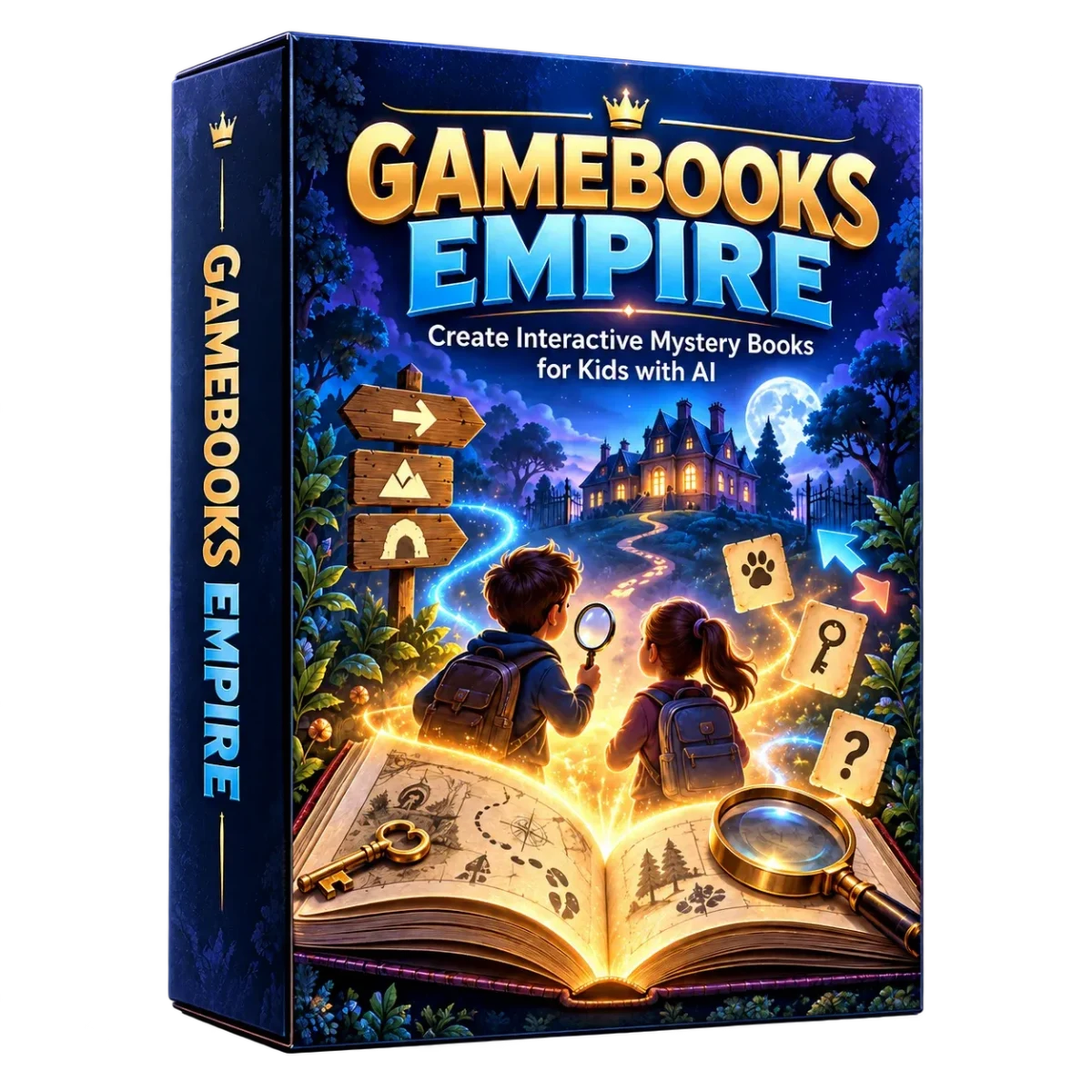
If you have spent any time around the self-publishing crowd lately, you have probably noticed that low-content and no-content books are not the only game in town anymore. Interactive books, the kind where the reader makes choices and jumps from page to page, are quietly picking up fans. That is exactly the space GameBooks Empire is aiming at, and it is the reason I sat down to write this GameBooks Empire review.
The pitch is simple on the surface. You get a big pack of ChatGPT prompts that help you create adventure gamebooks with branching paths, puzzles, and multiple endings, all set in historical worlds. No complicated software, no design degree, no months of plotting. Just prompts, an AI tool, and your own editing.
Of course, a pitch is only a pitch. What I want to know, and what you probably want to know, is whether this thing is actually useful, who it fits, what the upsells really add, and whether the price makes sense. So I went through the details carefully and put everything below in plain language. I will tell you what looks strong, what looks shaky, and where you should keep your expectations realistic.
One quick note before we start. I am writing this from the product information, the offer structure, and how the system is described to work. I am not going to throw around income promises or pretend this is a magic button. Gamebooks still need your judgment, your edits, and some patience. With that said, let's get into it.
What Is GameBooks Empire?
GameBooks Empire is a prompt-based creation system built around roughly 546 ready-made ChatGPT prompts. Those prompts are designed to walk an AI model through writing a complete historical adventure gamebook, from the first setup page to the final ending.
If you have never held a gamebook, think of the old "choose your own adventure" style. You read a short section, then you get a choice. Go through the left door and turn to page 24. Fight the guard and turn to page 31. Each choice sends the reader somewhere new, and the story can end in several different ways, some good and some bad.
What makes a gamebook harder to write than a normal novel is the logic behind it. Every page has to point to the right next page. Items you pick up have to matter later. Health or resources have to be tracked. Puzzles have to be solvable. Miss one link and the reader ends up on a page that makes no sense. That is the pain point this system is trying to remove.
According to the offer, the prompts are built to produce gamebooks of around 50 to 55 pages, with balanced puzzles, branching routes, and more than one ending. The historical angle matters too. Instead of random fantasy, the books lean on real eras, places, and events, which gives the story a ready-made backdrop and makes the research side much lighter.
In short, it is a done-for-you prompt library for a very specific kind of book. It is not a general writing course, and it is not a publishing platform. It is a toolkit for one job, and it tries to do that job well.
==> Get The Full GameBooks Empire Buying <==
Why Historical Gamebooks Are Getting Attention
Before judging the product, it helps to understand why anyone would want to make these books at all. Gamebooks sit in a nice middle spot between fiction, puzzles, and games. Readers who enjoy interactive stories often want something a bit more hands-on than a regular paperback, and parents like them because kids stay engaged without a screen.
Historical themes add another layer. A reader who picks up a gamebook about ancient Rome, a medieval siege, or a voyage across the sea gets a story and picks up a few facts along the way. That mix of fun and learning is easy to market, especially for gifts and for families who homeschool.
Another reason this niche catches eyes is competition. Plenty of categories on Amazon are packed with hundreds of near-identical books. Gamebooks, particularly well-built historical ones, are less crowded. Fewer people attempt them because they are tricky to write, and the tricky part is exactly where most beginners give up.
That is the gap GameBooks Empire tries to fill. If the hard part is handled by tested prompts, a beginner can at least get a structurally sound draft on the table. Whether you then publish it, polish it, sell it, or just enjoy making it is up to you. I would add one honest warning though. Less competition does not mean easy money. A book still has to be good, well presented, and found by the right readers.
What You Get Inside the Front-End Product
The main product costs $17 and is the foundation of the whole system. Here is what the front-end is built around.
• A large library of about 546 prompts covering the full gamebook process, not just the story text.
• Prompts for planning the setting, the main character, the goal, and the historical period.
• Prompts that handle page-by-page structure so the branching stays organized.
• Puzzle and challenge prompts designed to feel fair rather than random.
• Resource and inventory logic, so items, health, or points actually mean something in the story.
• Prompts for multiple endings, including good, bad, and in-between outcomes.
• Support for producing books in the 50 to 55 page range.
What I like here is that the prompts are not one giant block of text you paste in and hope for the best. They are broken into steps. That is how AI tools work best. When you ask a model to write an entire gamebook in one go, the logic usually falls apart halfway through. When you guide it step by step, the result is far more consistent.
I also appreciate that the system treats the gamebook as a system rather than a story. Most people who try writing branching fiction with a chatbot run into the same wall. The AI forgets which page leads where, repeats scenes, or lets the reader walk into dead ends. A structured prompt library gives the AI guardrails, and that is where the real value sits.
At $17, the front-end is priced like an impulse buy. That is worth keeping in mind later when we talk about the upgrades, because the low entry price is the hook, and the bigger spending happens after you are already in.
How GameBooks Empire Works, Step by Step
You do not need to be technical to follow the process. As far as I can tell from the way the system is laid out, the workflow looks like this.
Step 1: Pick Your Era and Concept
You start by choosing a historical setting. It might be an ancient empire, a famous voyage, a medieval kingdom, or a wartime mission. The prompts help you shape a simple concept, including who the reader plays as and what they are trying to achieve.
Step 2: Build the Structure
Next comes the skeleton. Instead of writing story first, you map out how many sections the book will have, where the big choices happen, and how the endings branch off. This is the part that normally gives people headaches, and it is good to see it handled early.
Step 3: Generate the Sections
Now the AI writes the actual content, section by section, guided by the prompts. Each section ends with a choice or a result, and each choice points somewhere specific. Because the structure already exists, the writing stays on track.
Step 4: Add Puzzles and Resources
This is where the book starts to feel like a real game. Puzzles, hidden items, and resource checks get layered in so decisions have consequences. A reader who ignores a clue in section 10 might pay for it in section 40.
Step 5: Edit, Format, and Publish
The last step is yours. You read through the draft, fix awkward lines, test the paths, and format the book for whatever platform you plan to use. The prompts get you most of the way, but a human pass is what turns a draft into something worth selling.
Honestly, that last step is the one people want to skip, and it is the one that matters most. I will come back to it in the tips section.
==> Read The Truth GameBooks Empire Today <==
Key Features Worth Talking About
Here are the features of GameBooks Empire that stood out to me most.
Built-In Logic Control
Gamebooks live or die on logic. The prompts are designed so the page links, items, and outcomes stay consistent. If the system delivers on this, it saves a huge amount of rework.
Historical Grounding
Using real eras gives your books a built-in identity. It also makes the books easier to describe, easier to categorize, and easier to recommend to the right audience.
Multiple Endings
Replay value is what makes interactive books fun. Several endings give readers a reason to go back and try different choices, which makes the book feel bigger than its page count.
Balanced Puzzles
Nobody enjoys a puzzle that is impossible or painfully obvious. Prompts built around balance help the challenge land in a comfortable middle zone.
Beginner-Friendly Setup
You do not need coding skills, design software, or writing experience to start. A ChatGPT account and a bit of time are the real requirements.
Reusable Prompt Library
This might be the most underrated part. Once you have the prompts, you can use them again and again with new settings. One purchase can produce many different books, so the cost per project drops fast if you keep going.
GameBooks Empire Pricing and OTO Breakdown
Let's talk money, because this is where a lot of buyers get surprised. The front-end is cheap, but like most launches in this space, there is a chain of optional upgrades. Here is the pricing structure for the full funnel.
|
Product Name |
Price |
|
Gamebooks Empire |
$17.00 |
|
Gamebooks Empire OTO1 |
$27.00 |
|
GameBooks Empire OTO2 |
$37.00 |
|
GameBooks Empire OTO3 |
$37.00 |
|
GameBooks Empire OTO4 |
$47.00 |
|
GameBooks Empire OTO5 |
$67.00 |
A few things to note. The front-end at $17 is the only piece you need to get started. Everything else is optional. The upgrades range from $27 up to $67, and if you bought every single one, the combined total would climb well past a hundred dollars. Prices on launches like this can change, so always check the current figures on the official page before you buy.
My honest advice is simple. Start with the front-end only. Make one complete book. See how the prompts feel, how much editing the output needs, and whether you actually enjoy the process. If you finish that first book and want more content, more themes, or more shortcuts, then look at the upgrades one at a time and ask yourself what specific problem each one solves.
Buying everything on day one because of a countdown timer is how people end up with a folder full of unused files. A smaller, smarter spend usually works out better.
If you want to check the current offer and see exactly what is included, you can view the details on the official GameBooks Empire page.
Who Is GameBooks Empire Best For?
No product is right for everyone, so let's be clear about who gets the most out of this one.
• Self-publishers who want to try interactive books without learning branching logic from scratch.
• Writers who love history and want a faster way to turn it into stories.
• Beginners who feel stuck staring at a blank page and need structure.
• Parents, teachers, and homeschoolers who want to create custom adventures for kids.
• Content creators looking for a fresh product idea in a less crowded niche.
It is probably not the best fit for someone who wants zero involvement. If you are hoping to press one button and collect money, this is not that. It is also not ideal for people who dislike using AI tools, since the whole system is built around them.
And if you already write gamebooks professionally and have your own tested workflow, this might feel like more than you need. It is aimed squarely at people who want help with structure and speed.
==> See My 30-Day GameBooks Empire Here <==
Pros and Cons
What I Liked
• Very low entry price at $17 compared with many creation tools.
• A huge prompt count that covers structure, puzzles, resources, and endings.
• Works in a niche that is less saturated than many others.
• No special software or technical skills required.
• Reusable for multiple books, which stretches the value of the purchase.
• Step-by-step approach that keeps AI output more consistent.
What Could Be Better
• Output still needs human editing, and some sections may feel generic until you tweak them.
• The funnel has several upsells, which can tempt buyers to overspend.
• Results depend on the AI tool you use and how carefully you follow the steps.
• Quality control is on you, especially for historical accuracy.
• It will not magically create sales. Marketing and presentation still matter.
Overall the strengths lean heavily toward value for money, while the weaknesses are mostly the usual limits of any AI-assisted workflow. None of the downsides are dealbreakers, as long as you walk in with realistic expectations.
Tips for Getting Better Results
Prompts are only as good as the person using them. If you decide to try GameBooks Empire, these habits will help you get far better books.
Follow the Order
It is tempting to jump ahead and start writing story text. Resist that. Build the structure first. The order exists because later steps depend on earlier ones, and skipping around is how links break.
Test Every Path
Once your draft is done, read it like a player. Click through each route. Make sure every choice leads somewhere and every ending can actually be reached. This tedious step is what separates a polished book from a frustrating one.
Check the History Yourself
AI tools sometimes invent details with total confidence. If your book is set in a real era, verify the key facts, names, and dates with a trustworthy source. Readers who love history will notice mistakes quickly, and reviews can get harsh.
Give the Story Your Own Voice
Read the text out loud. Wherever it sounds stiff or robotic, rewrite it in your own words. A few personal touches, a funny line here, a vivid detail there, go a long way toward making the book feel human.
Start Small
Make your first book simple. A shorter, cleaner book teaches you the process faster than an ambitious one that collapses halfway through. Once you understand the flow, you can get bolder.
Think About the Reader
Decide early who the book is for. A gamebook for ten-year-olds needs different language and difficulty than one for adult history fans. Matching the tone to the audience makes everything else easier, including the cover and description.
GameBooks Empire vs Writing a Gamebook by Hand
To judge the value properly, it helps to picture the alternative. Imagine you wanted to write a 50-page gamebook the old-fashioned way, with nothing but a notebook and a spreadsheet.
You would sketch a flowchart of every choice. You would number each section, then make sure every number links to the right place. You would track items and health points on a separate sheet. You would write the puzzles, then test them yourself, then discover that one of them can be skipped entirely by taking a shortcut you forgot about. Many people who attempt this quit before they reach the halfway mark, and honestly, I do not blame them.
Now picture the same project with a structured prompt library. The planning is guided, the sections are drafted for you, and the puzzles and resource checks follow set patterns. You are still the editor and the creative director, but you are no longer doing every mechanical task by hand.
That does not mean the AI route is always better. A skilled author writing by hand will often produce a more original and more polished book. The difference is speed and accessibility. GameBooks Empire is aimed at people who would never finish the manual route, or who want to produce several books in the time it would take to hand-write one.
What Makes a Good Gamebook (and Where Prompts Help)
It is worth understanding what readers actually want, because even the best prompts cannot rescue a book that misses the basics.
A good gamebook gives the reader real agency. Choices should feel meaningful, not like a coin flip. If every path leads to the same place, readers notice and feel cheated. A good one also has pacing, with quiet moments, tense moments, and a few surprises. Then there is the fairness factor. Readers will happily lose, but only if the loss feels earned and not random.
This is where a structured system helps. Prompts that handle branching, items, and consequences give you a solid frame for agency and fairness. What the prompts cannot do is give your book personality. That part still comes from you, from the tone you choose, the details you add, and the little touches that make a reader smile or hold their breath.
So think of it this way. The system builds the engine. You decide where the car goes and how it looks.
A Realistic Look at a First Project
Let me walk through how a first project might go, so you know what to expect in the real world instead of the marketing version.
You pick an era you already find interesting, say a medieval castle siege. That choice matters more than people think. If you like the topic, you will have the energy to fact-check and polish. You work through the setup prompts and end up with a character, a goal, and a rough shape for the story.
Then you build the structure. This is usually where the first small frustration shows up. The AI may suggest a layout you do not love, and you will need to ask for changes. That is normal. Treat it like a conversation with an assistant, not a vending machine.
Next, you generate the sections. Some will be great. Some will be flat. A few might contradict earlier details. You fix those as you go. By the time you reach the endings, you will have a draft that feels about seventy percent finished, and the last stretch is spent testing paths, tightening language, and formatting the pages.
For a beginner, that whole process could take several days of casual work. Later books get faster, because you already know the rhythm. That is the real payoff of a reusable library.
Presentation and Marketing Matter Too
A finished manuscript is only half the job. If you plan to sell your gamebooks, the packaging deserves real attention.
• Cover design: a clean, eye-catching cover tells shoppers what kind of book this is within a second.
• Title and subtitle: make it obvious that this is an interactive adventure set in a specific time period.
• Description: explain what the reader gets, such as multiple endings, puzzles, and a historical setting.
• Age range: be clear about who the book is for so the right readers find it.
• Reviews and feedback: ask early readers to try the paths and point out any broken links.
Many first-time publishers pour all their effort into the writing and then rush the cover and description. That is a common mistake. Shoppers judge books fast, and a weak cover can sink a good story. Spend as much time on how the book looks and reads in a store listing as you do on the story itself.
It is also smart to look at what is already selling in the category. Study the covers, the titles, and the reviews of existing gamebooks. You will learn what readers love and what they complain about, and you can steer your own books accordingly.
Should You Buy the Upgrades?
This question deserves its own section because it is where most of the extra money gets spent. The funnel offers five upgrade levels, from OTO1 at $27 to OTO5 at $67.
As a general rule with any product funnel, upgrades usually add more content, extra themes, bonus tools, or extended usage options. They are rarely required to use the main product. Before paying for any of them, read the description closely and ask three simple questions.
1. Does this solve a problem I actually have right now?
2. Can I get the same result using the front-end I already own?
3. Will I realistically use it in the next thirty days?
If the answer to any of those is no, skip it. You can always come back later if you decide you want more. A project finished with the basic system beats a stack of unused extras every single time.
Common Concerns Before You Buy
Let's address a few worries that probably cross your mind.
First, "Will the books sound like AI wrote them?" Possibly, if you publish raw output. That is true of any AI writing. The fix is editing. Treat the prompts as a first draft engine, then shape the result into something that reads naturally.
Second, "Can I really make money with this?" Nobody can promise that, and you should be skeptical of anyone who does. What the system can do is shorten the time and effort needed to create a finished product. Sales depend on your niche choice, your presentation, your marketing, and a fair amount of testing.
Third, "Do I need the upgrades?" No. The front-end works on its own. Think of the upgrades as extras for people who want more themes or more content, not as requirements.
Finally, "Is it worth $17?" For the price of a couple of coffees, getting a large organized prompt library is hard to argue with, as long as you actually use it. The real cost is your time, not the purchase price.
One last thought before the verdict. The people who get the most out of tools like this are rarely the ones who buy the most. They are the ones who finish something. A single complete, well-edited gamebook teaches you more about the niche than ten half-built ideas ever will, so keep your first goal small and your standards honest.
Final Verdict: Is GameBooks Empire Worth It?
After going through everything, here is where I land. GameBooks Empire is a focused, reasonably priced toolkit for a niche that most people find intimidating. It tackles the hardest part of gamebook creation, the logic and structure, and hands you prompts that keep the AI on a leash.
It is not magic, and it does not replace creativity or editing. But for $17, the front-end offers solid value for anyone curious about interactive books, historical storytelling, or finding a less crowded corner of self-publishing.
My suggestion is to grab the front-end, build one complete book, and judge the system on real results rather than hype. If it clicks, you have a repeatable process you can use again and again. If it does not, you have lost less than the price of a lunch.
If that sounds like a fair deal, you can take a look at the official GameBooks Empire offer and see the current details for yourself.
Frequently Asked Questions (FAQs)
What is GameBooks Empire?
It is a library of about 546 ChatGPT prompts that helps you create historical adventure gamebooks with branching paths, puzzles, and multiple endings.
How much does GameBooks Empire cost?
The front-end product is $17. Optional upgrades run from $27 to $67, but you do not need them to get started.
Do I need writing or tech skills?
No. You only need a ChatGPT account and a willingness to edit the results. The prompts guide the structure for you.
Can I sell the books I create?
Many people plan to publish them, but you should check platform rules and the license terms on the official page before selling anything.
Is GameBooks Empire good for beginners?
Yes. The step-by-step prompts handle the tricky logic, which makes it easier for beginners to finish a complete gamebook.