VideoHub AI Review Is This $17 AI Video Creator Really Worth Your Money?
Introduction
If you have spent even ten minutes on YouTube, Instagram, or TikTok lately, you have probably noticed something. A huge number of videos are no longer filmed with cameras at all. They are generated, polished, and published with the help of artificial intelligence. Product ads, short stories, talking presenters, movie-style trailers, even full explainer videos can now be created from a simple text idea.
That shift has opened a door for beginners, freelancers, and small business owners who never had the budget for cameras, actors, or editors. It has also created a flood of new tools, and honestly, it is hard to know which ones deserve your attention. That is exactly why I sat down to write this VideoHub AI review.
VideoHub AI is being promoted as an affordable, all-in-one platform for creating AI videos, with a low front-end price and a long list of bonuses attached. In this review, I will walk you through what it is, who it is meant for, what you actually get, how the upgrade funnel works, and whether it makes sense for your situation. I will keep things honest and practical, because nobody likes a review that reads like a sales page.
What Is VideoHub AI?
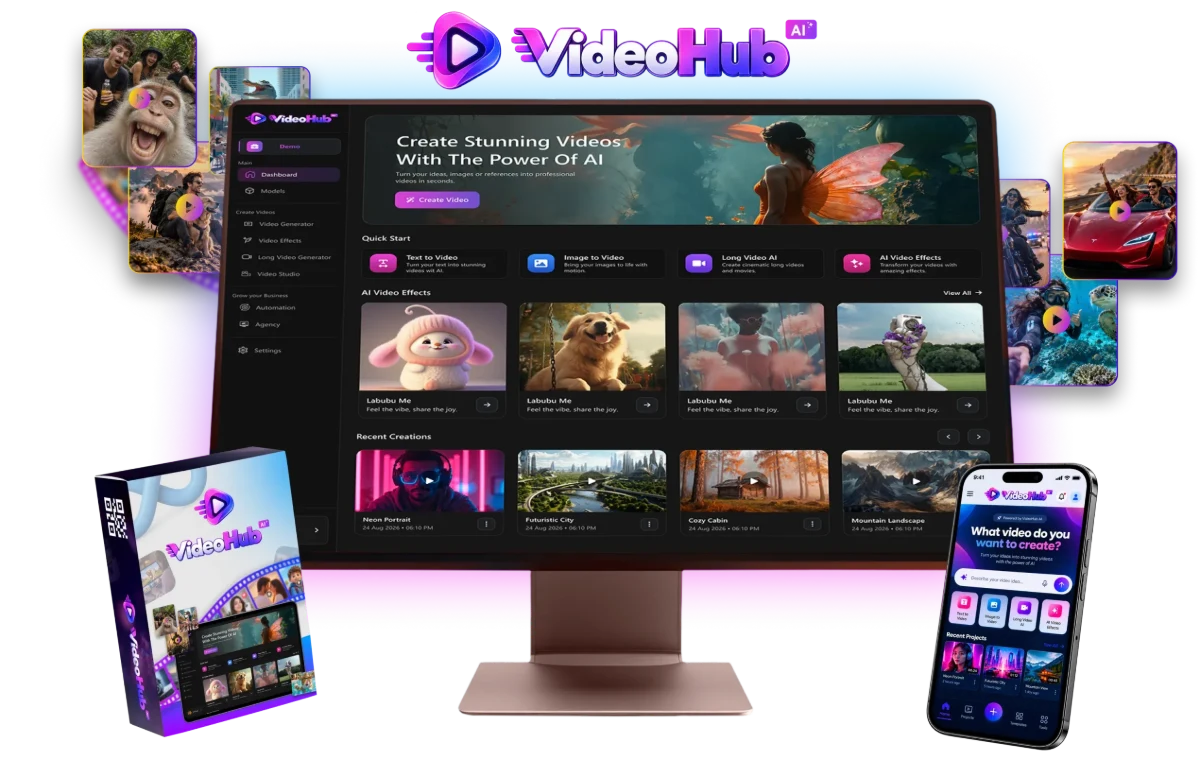
VideoHub AI is a cloud-based AI video creation platform. In simple terms, you open a dashboard, describe the kind of video you want, and the software helps you generate it. According to the current promotional information, the main offer includes access to the core dashboard, video generation tools, talking avatars, and commercial rights.
That last part matters more than most people realize. Commercial rights mean you are allowed to use the videos you create for business purposes, such as making ads for a client or posting monetized content. Without those rights, a tool is basically a toy. With them, it can become a small income stream.
The platform is sold as a one-time payment during its launch period rather than a monthly subscription. For anyone who has been burned by tools that quietly charge you every month, that is a refreshing change. Still, one-time pricing during a launch usually does not last forever, so it is worth understanding the whole picture before you decide.
==> Get The Full VideoHub AI Buying <==
Who Is VideoHub AI Really For?
No tool is perfect for everyone, so let me be clear about who I think benefits most from this one.
• Complete beginners. If you have never edited a video in your life and the idea of timelines and keyframes makes you nervous, a prompt-based tool is a gentle starting point. The bonus packs, especially the prompt libraries and templates, are clearly designed with newcomers in mind.
• Content creators. If you run a faceless YouTube channel or post short clips on Instagram Reels and TikTok, you need a steady supply of fresh videos. Anything that speeds up production is valuable.
• Freelancers and aspiring agency owners. Many people are now earning by offering AI video services to local businesses. A cheap tool with commercial rights, plus resources on packaging and pricing, fits that model well.
• Small business owners. If you sell products or services and want simple promotional videos without hiring a studio, this kind of software can save real money.
On the other hand, if you are a professional filmmaker who needs frame-by-frame control and broadcast-level output, a budget AI tool will probably feel limiting. That is not a criticism of VideoHub AI specifically. It is just the nature of the category.
Key Features of VideoHub AI
Based on the information available, here is what the front-end version offers and why each piece matters.
Main Dashboard and Video Generation Tools
The dashboard is where everything happens. You enter your idea, choose your style, and let the tool produce a video. The goal of any good dashboard is to keep the process simple, so you spend your time on ideas instead of settings. Since the platform is aimed at beginners, I would expect a straightforward workflow rather than a complicated professional interface.
Talking Avatars
Talking avatars are one of the most popular uses of AI video right now. Instead of recording yourself on camera, you let a digital presenter deliver your script. This works well for promotional videos, tutorials, business updates, and social content. If you are camera-shy or you simply do not have the time to record, avatars can be a real lifesaver.
Commercial Rights
Commercial rights are included even in the $17 front-end offer. This is a big plus. It means you can start creating videos for clients or for your own monetized channels from day one, without having to buy an extra license first.
Support for Different Video Styles
The bonus packs mention cinematic scenes, product ads, short-form clips, trailers, and long-form content. That tells me the platform is meant to cover many niches rather than just one type of video. How well it handles each style will depend on your prompts and your expectations, but the range is encouraging.
How VideoHub AI Works: A Simple Walkthrough
While every tool has its own quirks, the general process for platforms like this is usually the same. Here is how I would approach it as a new user.
• Step 1: Start with an idea. Decide what kind of video you want, whether it is a product advertisement, a short story, or a talking presenter explaining a topic.
• Step 2: Write or choose a prompt. This is where the bonus prompt packs come in handy. Instead of staring at a blank box, you can start from a ready-made prompt and adjust it to your needs.
• Step 3: Generate your video. The AI processes your input and creates the clip. Some results will be great on the first try, and others will need a few tweaks. That is normal with any AI tool.
• Step 4: Refine and improve. Adjust your prompt, try different camera movements, or change the style until the video looks right. The optimization guide and camera movement kit in the bonuses are meant to help here.
• Step 5: Publish or deliver. Upload the finished video to your channel or send it to a client. Because commercial rights are included, you can use it for business purposes.
==> Read The Truth VideoHub AI Today <==
Pros and Cons of VideoHub AI
A fair review should always show both sides, so here is my honest take.
What I Like
• Very low entry price. At $17 as a one-time payment, the risk is small compared with most video tools on the market.
• Commercial rights are included. You do not have to pay extra just to use your videos for business.
• A huge bonus stack. Fifteen bonuses covering prompts, templates, scripts, storyboards, and even pricing tools add a lot of practical value, especially for beginners.
• Beginner-friendly direction. Everything about the offer, from the prompt packs to the profit guidance, is built around helping new users get started.
• Useful for earning. The service packages, pricing calculator, and content calendar show that the creators thought about how people actually make money with AI video.
What Could Be Better
• The funnel is long. There are six upsells after the main purchase. Some buyers may feel pressured to keep clicking.
• Results depend on your prompts. AI tools are only as good as the instructions you give them. Expect a learning curve.
• Launch pricing is temporary. Prices and offer details can change once the public launch ends.
• Not built for high-end film production. If you need cinematic perfection, you will likely need more advanced tools.
15 Exclusive Bonuses Included With VideoHub AI
One of the most eye-catching parts of this offer is the bonus package. Fifteen extras are included, and I want to go through them so you can judge their real value. I have grouped them by purpose to make them easier to follow.
Prompts and Creative Ideas (Bonuses 1 to 5)
• Bonus #1: 200 Ready-to-Use AI Video Prompts. A big collection of prompts for different styles, niches, and creative ideas. For beginners, this alone can save hours of trial and error.
• Bonus #2: Character Consistency Prompt Kit. One of the hardest things in AI video is keeping the same character looking the same across scenes. This kit focuses on exactly that problem, which helps when you are building multi-scene stories.
• Bonus #3: 100 Cinematic Video Templates. Templates for producing videos with a professional, film-like look. They give you a head start instead of building every scene from zero.
• Bonus #4: AI Movie Trailer Creation Kit. Concepts, scene ideas, and workflows for Hollywood-style trailers. Trailers are very shareable, so this one can be fun and effective for growing an audience.
• Bonus #5: Viral Reels and Shorts Prompt Pack. Short-form ideas aimed at YouTube Shorts, Instagram Reels, and TikTok. If you post frequently, this pack keeps your ideas flowing.
Scripts, Planning, and Structure (Bonuses 6 to 8)
• Bonus #6: AI Video Script Generator. Turns your rough ideas into scripts, storylines, and narratives. A good script is half of a good video, so this is a handy addition.
• Bonus #7: AI Storyboard Creation Kit. Helps you plan scenes and visual sequences before generating them. Planning ahead saves time and reduces wasted generations.
• Bonus #8: Long-Form Video Creation Blueprint. Explains how to structure longer videos and multi-scene stories from start to finish. Useful if you want to go beyond short clips.
Business and Advertising (Bonuses 9 and 10)
• Bonus #9: 100 Product Advertisement Prompts. Prompts designed for eye-catching product videos and promotional content for brands, online stores, and businesses.
• Bonus #10: AI Avatar Script Library. Ready-made scripts for AI avatars, talking presenters, promotional videos, and business content. It pairs nicely with the talking avatar feature.
Quality and Camera Control (Bonuses 11 and 12)
• Bonus #11: Cinematic Camera Movement Prompt Kit. Prompts for dynamic shots, dramatic angles, and cinematic scenes. Camera movement is often what separates amateur AI clips from impressive ones.
• Bonus #12: AI Video Quality Optimization Guide. Practical techniques for improving composition, visual consistency, clarity, and overall quality.
Making Money and Staying Consistent (Bonuses 13 to 15)
• Bonus #13: 50 Ready-to-Sell Video Service Packages. Fifty service package ideas that you can customize and offer to businesses, brands, and clients. This is a shortcut for anyone who wants to start freelancing.
• Bonus #14: AI Video Pricing Calculator. Helps you estimate project prices and organize your service packages, so you can quote clients with more confidence.
• Bonus #15: AI Video Content Calendar. A plan with daily video ideas, content themes, and a consistent publishing schedule for YouTube, Instagram, and TikTok.
My honest view: bonuses are only worth something if you actually use them. Still, this particular stack is better than average because it is practical. It does not just throw random files at you. It covers the full journey, from getting ideas, to creating videos, to improving quality, to selling services and posting consistently.
VideoHub AI Pricing and OTO Funnel
When you buy software during a public launch, it helps to know the full pricing structure and the optional upgrades, called OTOs, before you reach checkout. That way you avoid surprise costs. Here is the complete breakdown of the VideoHub AI funnel based on the current promotional data.
• Front-End (FE), VideoHub AI Special: $17 (one-time payment). This is the core entry-level offer. It gives you access to the main dashboard, generation tools, talking avatars, and commercial rights.
• OTO 1, VideoHub AI Pro: $67 to $97. Made for heavier users. This upgrade lifts starter limitations, expands operational capacity, and streamlines high-frequency workflows.
• OTO 2, VideoHub AI Traffic Automation: $67. Focuses on automated distribution and traffic generation tools, helping you push published videos across platforms with less manual posting.
• OTO 3, VideoHub AI Profit System: $37. Tailored for beginners. It offers step-by-step guidance on packaging video services, finding clients, and monetizing your creations.
• OTO 4, VideoHub AI Agency: $147. Unlocks team accounts and structural features built for running a client-serving digital agency.
• OTO 5, VideoHub AI Reseller: $97. Grants permission to sell the software under your own promotional umbrella and keep specific profit margins.
• OTO 6, VideoHub AI Whitelabel: $297. The highest-tier package, allowing full rebranding rights over the software platform.
Please note that the $17 front-end purchase gives you a functional starting point. You do not need to buy all the upsells to make the core app work. Evaluate each OTO based entirely on your own business requirements.
==> Click Here to Get VideoHub AI + Bonus at a Discount Price <==
Which VideoHub AI Upgrades Are Worth Buying?
Seeing six upsells can feel overwhelming, so let me simplify things. This is only my opinion, and your situation may be different.
If You Are a Complete Beginner
Start with the front-end only. Spend a few weeks learning the dashboard, using the bonus prompts, and creating real videos. Once you know how you like to work, you can decide whether an upgrade makes sense. If you want guidance on getting clients, the Profit System at $37 is the most affordable and beginner-focused option in the funnel.
If You Create Videos Often
The Pro upgrade could be worth considering if you keep running into the limits of the starter version. Heavy users usually feel those limits first. If you are not hitting them, there is no rush.
If You Want to Grow Your Reach
The Traffic Automation upgrade is about distributing your videos with less manual work. That may appeal to creators who are posting across several platforms. Just remember that no automation can replace good content.
If You Plan to Run an Agency
The Agency upgrade makes sense only when you already have clients or a clear plan to get them. Team accounts are pointless if you are working alone and have no customers yet.
If You Want to Sell the Software Itself
Reseller and Whitelabel are for people who want to build a software business. They cost more and require marketing skills. For most readers, I would call these optional and advanced.
How to Make Money With VideoHub AI
Let us talk about the question many readers care about most. Can you earn from a tool like this? The honest answer is yes, it is possible, but it takes effort. No software prints money by itself. Here are a few realistic paths.
• Offer video services to local businesses. Restaurants, gyms, salons, and online stores all need promotional content. Use the product ad prompts and service packages to create simple offers, then reach out to businesses directly.
• Build a faceless content channel. Use the shorts and reels prompts, along with the content calendar, to publish consistently. Over time, you may earn through ad revenue, affiliate links, or sponsorships.
• Create AI avatar explainer videos. Many companies want short explainers but do not want to film them. Talking avatars and the avatar script library fit this need well.
• Sell trailer or story videos. Cinematic content attracts attention. A strong trailer can grow your following, which you can later turn into income.
The key is consistency. Pick one path, create regularly, and improve a little with every video. People who succeed with AI tools are usually the ones who keep showing up, not the ones who buy the most tools.
Tips for Getting the Best Results
Even the best platform can produce disappointing videos if you rush. These simple habits will help you get more from VideoHub AI or any similar tool.
• Be specific in your prompts. Describe the subject, setting, lighting, mood, and camera movement. Vague prompts create vague videos.
• Plan before you generate. Use the storyboard kit to map out scenes first. It saves time and reduces wasted attempts.
• Keep characters consistent. If your story has a main character, use the character consistency kit so they look the same throughout.
• Start short. Master ten-second clips before attempting long-form videos. Skills build step by step.
• Review before publishing. Always watch the final video once. Small glitches are easier to fix before clients or followers see them.
Final Verdict: Is VideoHub AI Worth It?
After going through everything, here is where I land. At $17, VideoHub AI is priced low enough that the risk is small for most people. You get a dashboard, generation tools, talking avatars, and commercial rights, plus a bonus stack that is genuinely useful for beginners who want to create videos and possibly earn from them.
The upsell funnel is long, and you should approach it with a clear head. You do not need every upgrade. Start with the front-end, test it with real projects, and only add extras when your business actually calls for them.
If you are a beginner, a creator, or a freelancer looking for an affordable way into AI video, I think VideoHub AI is worth a look. If you expect Hollywood-level control or instant income without effort, you may be disappointed. As always, set realistic expectations, use the bonuses, and keep creating.
Before you buy, check the official page for the latest pricing, refund terms, and offer details, since launch promotions can change quickly.
Frequently Asked Questions (FAQs)
1. What is VideoHub AI?
VideoHub AI is an AI video creation platform with generation tools, talking avatars, and commercial rights, sold with a one-time front-end price.
2. How much does VideoHub AI cost?
The front-end offer is $17 as a one-time payment. Optional upgrades range from $37 to $297.
3. Do I need to buy all the upsells?
No. The $17 front-end gives you a working starting point. Choose upgrades only if they match your needs.
4. Is VideoHub AI good for beginners?
Yes. The prompt packs, templates, and step-by-step bonuses are designed to help newcomers get started.
5. Can I use the videos commercially?
Yes. Commercial rights are included in the front-end offer, so you can use videos for clients or monetized channels.