Dead Signal Book Builder Review Is This AI Book Creation Tool Worth Your Money?
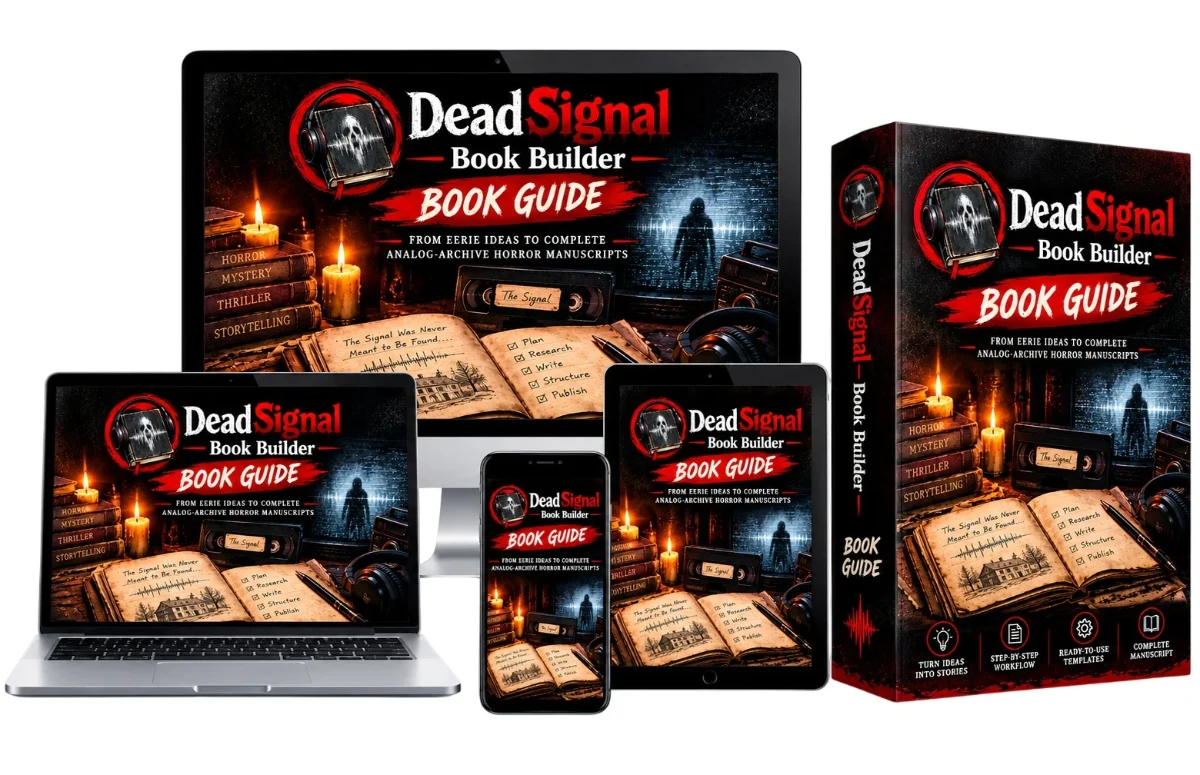
Writing a book from a blank page is slow work. You need an idea, an outline, hours of drafting, and a lot of patience for editing. That's exactly why AI book builders keep popping up in the digital publishing world, and why every few weeks a new one arrives with big promises and a low launch price.
Dead Signal Book Builder is one of the latest. It's listed on the product launch calendars with a $17 front-end price and a funnel of upgrades stretching all the way to $97. In this Dead Signal Book Builder review, I'll break down what the product is, how the pricing really works once you factor in the bump and upsells, who it might suit, and what you should check before spending a cent.
A quick note on how this review was put together. It's based on publicly available information about the launch and the funnel pricing, not on a long hands-on test. Where details aren't confirmed, I'll say so plainly instead of guessing. I'd rather give you an honest picture than a hype-filled one.
What Is Dead Signal Book Builder?
Dead Signal Book Builder is an AI-powered book creation product aimed at people who want to produce books, guides and similar content faster. The general idea behind tools in this category is simple: you give the software a topic or concept, and it helps you plan the structure and generate draft material that you can then edit, format and publish.
It's sold through the usual launch channels and is credited to a vendor called Nhan Scope on the MunchEye launch calendar, with a front-end price of $17. Third-party coverage describes it as a tool for building books and PLR-style content with AI, suited to marketers, bloggers, freelancers and digital creators.
One thing worth mentioning right away: the name "Dead Signal" is shared by several unrelated things, including a psychological thriller book series, a horror video game and a couple of novels. If you search for it online, you'll see plenty of results that have nothing to do with this software. Make sure you're looking at the actual product page before you buy anything.
Who Is It Designed For?
Based on how products like this are normally positioned, Dead Signal Book Builder is likely to appeal to a few kinds of people.
• New digital publishers. If you want to try self-publishing but dread the writing part, an AI assistant can make the first step feel less intimidating.
• Marketers and list builders. Short ebooks and guides make useful lead magnets and bonuses, and a faster drafting process can help.
• Freelancers and coaches. People with real expertise but little time can use AI to turn notes and ideas into a structured draft.
• Low-content and niche publishers. Anyone testing multiple book ideas may like being able to generate a base draft quickly.
• PLR sellers. Creators who produce private label content in bulk may see the appeal of speeding up the process.
On the other hand, if you're an experienced author with a strong voice and an established workflow, you might find a tool like this less useful. It's built for speed and structure, not for replacing a distinctive writing style.
==> Get The Full Dead Signal Book Builder Buying <==
What an AI Book Builder Can (and Can't) Do
Before looking at pricing, let's set expectations. These tools are often sold with language like "create a book in minutes," and while the speed claim isn't entirely false, it can be misleading.
What it can realistically help with
• Brainstorming book ideas and angles for a niche.
• Building a chapter-by-chapter outline.
• Producing a first draft that you can edit.
• Repurposing one idea into multiple formats, such as a book, blog posts and emails.
• Overcoming the blank-page problem, which is a bigger obstacle than most people admit.
What it usually can't do for you
• Guarantee the facts are correct. AI can state wrong information in a very confident tone.
• Add your personal stories, opinions and experience, which are what make a book worth reading.
• Make a book commercially successful. Topic, cover, title, pricing and marketing matter enormously.
• Replace editing. Raw AI text tends to repeat itself and drift into generic phrasing.
The best way to think about it is as a fast, tireless assistant that produces rough material. You're still the author, the editor and the decision-maker.
Dead Signal Book Builder Pricing and Funnel Breakdown
This is where many buyers get surprised, so it's worth looking closely. Like most software launches, Dead Signal Book Builder has a front-end offer, an order bump, and several one-time offers (OTOs), some of which have cheaper downsell versions. Here's the full price list as it appears on the launch listing.
|
Product Name |
Price |
|
Dead Signal Book Builder |
$17.00 |
|
Dead Signal Book Builder Order Bump |
$9.95 |
|
Dead Signal Book Builder OTO1 |
$37.00 |
|
Dead Signal Book Builder OTO1 Down |
$27.00 |
|
Dead Signal Book Builder OTO2 |
$67.00 |
|
Dead Signal Book Builder OTO2 Down |
$47.00 |
|
Dead Signal Book Builder OTO3 |
$97.00 |
|
Dead Signal Book Builder OTO3 Down |
$67.00 |
Front End: Dead Signal Book Builder ($17)
This is the entry point and the only purchase you need in order to get the core product. At $17, the risk is low, and that's the whole point of a launch price: make the first decision easy. Before buying, confirm on the sales page exactly what the core version includes, such as usage limits, access period and commercial rights.
Order Bump ($9.95)
The bump is a small add-on offered at checkout, usually a single checkbox you tick before paying. It brings your total to $26.95 if you accept it. Bumps are often worth reading about because they sometimes contain something genuinely useful, like extra templates or removed limits, but they're also easy to tick without thinking. Read the description before you decide.
OTO1 ($37) and OTO1 Down ($27)
OTO1 is the first upsell shown after your initial purchase. The "Down" price is typically what you're offered if you decline the first price, which means the same upgrade may be available for $10 less if you click through the downsell page. Funnels vary, so this isn't guaranteed, but it's a common pattern.
OTO2 ($67) and OTO2 Down ($47)
The second upsell is a bigger step up, and the downsell saves $20. If you're considering it, take your time. A mid-priced upgrade like this should solve a specific problem you already have, not a hypothetical one.
OTO3 ($97) and OTO3 Down ($67)
OTO3 is the most expensive offer, and the downsell cuts $30 off. Upgrades at this level are usually aimed at people who want advanced features, extra rights or higher volume. Unless you've already used the core tool and hit a clear limit, this is rarely a day-one purchase.
A caution: I couldn't confirm exactly what each upgrade contains from public sources, so I'm not going to guess at features. Open the official sales page and the upsell descriptions and read them carefully.
What Will You Actually Spend? Three Scenarios
Pricing tables can hide the real total, so let's add it up. These figures come straight from the price list above.
• The minimalist: Front end only, $17. The lowest-risk way to test the tool.
• The cautious buyer: Front end plus the order bump, $26.95.
• Everything at the downsell prices: Front end ($17), bump ($9.95), OTO1 down ($27), OTO2 down ($47) and OTO3 down ($67) comes to $167.95.
• Everything at full price: Front end ($17), bump ($9.95), OTO1 ($37), OTO2 ($67) and OTO3 ($97) comes to $227.95.
That's a big jump from a $17 launch price. It doesn't mean the upgrades are bad. It just means you should decide your budget before you click, because funnels are designed to make the next click feel easy. A good rule: start with the front end, use it for a week, and only then decide whether any upgrade solves a real problem.
==> Read The Truth Dead Signal Book Builder Today <==
Practical Ways You Could Use the Content
A tool like this is most valuable when you have a plan for what to do with the drafts. Here are some realistic ideas, none of which depend on a specific feature of the software.
Lead magnets
A short, focused guide is one of the most common ways to grow an email list. A ten-page checklist or mini-guide is far easier to finish than a full book, and a drafting assistant can help you get there quickly.
Bonus content
If you sell products or affiliate offers, a helpful bonus guide can make your offer more attractive. Even a simple, well-edited ebook adds perceived value.
Niche ebooks
Pick a small, specific audience and write something genuinely useful for them. Narrow topics tend to be easier to market than broad ones because the reader immediately sees the book is for them.
Content repurposing
Once you have a solid book draft, you can pull out blog posts, social media captions, email sequences and short videos. One well-researched piece can feed weeks of content.
Testing ideas before committing
Instead of spending a month on a book nobody wants, create a short version first. If people respond, expand it. If they don't, you've lost very little time.
Who Should Probably Skip It?
It's only fair to say who might not get much from it.
• Authors who already write quickly and enjoy the process. You may not need the help.
• Anyone expecting a finished, bestselling book with no editing. That isn't realistic with any AI tool.
• People who can't commit time to reviewing and improving the output.
• Buyers who feel pressured into every upsell. Stick to a budget or skip it.
• Writers publishing in sensitive areas, such as medical or financial advice, who aren't prepared to fact-check thoroughly.
If none of those describe you, and you're simply looking for a cheap way to speed up drafting, it may be worth a try.
Why Quality Control Matters More Than Speed
This is the part many AI-tool reviews skip, and it's arguably the most important. If you publish books, particularly under your own name or on a marketplace, the quality of what you release affects your reputation and your sales.
Fact-check everything
AI tools can invent statistics, quotes and references. If your book touches on health, money, law or anything where being wrong has consequences, verify every claim with a reliable source.
Add your own experience
Readers can tell when a book has no human behind it. Stories, examples, opinions and lessons from your own life make the difference between a forgettable guide and one that earns good reviews.
Edit for repetition and flow
AI drafts often restate the same point in slightly different words. Read the draft aloud, cut the filler, and tighten the transitions.
Check the platform rules
Publishing platforms have their own policies about AI-generated content, and these have been getting stricter in recent years. For example, Amazon's KDP has asked publishers to disclose AI-generated content when they submit a book. Policies change, so read the current guidelines for any marketplace where you plan to sell.
Check originality
Run your final manuscript through a plagiarism checker. Also confirm what rights you have to the generated text under the product's terms before you sell or give it away.
How to Get Better Results From Any AI Book Builder
Whether or not you end up buying Dead Signal Book Builder, these habits will improve what you get out of AI-assisted writing.
Start with a narrow topic
A broad topic produces broad, shallow content. "Healthy eating" is vague. "Simple meal prep for busy night-shift nurses" gives the tool, and you, something concrete to work with.
Define your reader first
Know who the book is for, what problem it solves and what the reader should be able to do afterward. Every chapter should serve that promise.
Plan before you generate
Create a clear outline before asking for long sections. A solid structure keeps the book coherent and saves you from rewriting later.
Generate in small pieces
Work one chapter or section at a time. It's easier to review, correct and improve shorter chunks than a giant block of text.
Rewrite the opening and closing yourself
The introduction and conclusion are where readers decide whether they trust you. Writing those parts in your own voice makes a noticeable difference.
Invest in the cover and the title
A well-written book with a weak cover and a vague title will struggle. These are marketing assets, so give them real attention.
==> Click Here to Get Dead Signal Book Builder + Bonus at a Discount Price <==
A Simple 7-Day Test Plan
If you decide to try it, don't buy randomly and hope for the best. A short, structured test tells you far more than a vague impression. Here's an easy way to do it.
• Day 1: Choose one narrow topic and write down who the book is for and what problem it solves.
• Day 2: Build a simple outline of five to eight chapters before generating any text.
• Days 3 and 4: Generate the draft one chapter at a time and note how much editing each section needs.
• Day 5: Edit for facts, repetition and flow, and add at least one personal example per chapter.
• Day 6: Format the book, create a basic cover and write a short description.
• Day 7: Decide honestly whether the time saved justified the cost, and whether any upgrade would solve a problem you actually ran into.
Notice that this plan uses only the front end. If the core tool can't impress you in a week, none of the upsells will fix that. And if it does impress you, you'll know exactly which limits you're hitting, which makes any upgrade decision far easier.
The Good: What Could Work in Its Favour
• A low entry price. At $17, the barrier to testing is small.
• Speed. Getting a draft quickly can help you test ideas before committing weeks to one.
• A guided workflow. Structure removes some of the early stress of writing.
• Fits several content goals. Books, guides, lead magnets and bonuses can all grow from the same base.
• Helpful for non-writers. People with knowledge but limited writing confidence may find it easier to start.
The Not-So-Good: What to Watch Out For
• A long upsell path. The funnel runs up to $97, and the total can easily exceed $200 if you buy everything.
• Limited confirmed details. Public information about exactly what each upgrade includes is thin, so you'll need to read the sales page closely.
• AI output needs editing. Raw drafts can be generic, repetitive or inaccurate.
• No guarantee of income. Nothing in a tool like this guarantees sales. Results depend on your topic, quality, marketing and competition.
• Name confusion. The "Dead Signal" name appears on unrelated books and games, so double-check you're on the right page.
• Platform policies. Marketplace rules about AI content can change, and you're responsible for following them.
Questions to Ask Before You Buy
A few minutes of homework can save you money. Before checking out, confirm these points on the official page.
• What exactly does the front end include, and are there usage limits?
• Do I get commercial rights to the content I create, or only personal use?
• Is access one-time or time-limited?
• What does each upgrade add, and do I genuinely need it right now?
• What is the refund policy, and what's the time window?
• How do I contact support if something doesn't work?
If the sales page can't answer these clearly, that's useful information in itself.
How It Compares to Other Options
AI book builders sit between two familiar alternatives. General-purpose AI chat tools are flexible and often cheaper, but you have to design your own process: your own prompts, your own outline method, your own way of keeping chapters consistent. Human freelance writers deliver a more polished, personal result, but they cost far more and take longer.
A dedicated book builder tries to sit in the middle, offering a guided path at a small price. Whether that's worth it depends on how much you value structure and convenience. If you're comfortable writing your own prompts, a general AI tool may be enough. If you want a more hand-held workflow, a purpose-built tool could save you time.
Final Verdict: Is Dead Signal Book Builder Worth It?
At $17, Dead Signal Book Builder is inexpensive enough that curiosity alone might justify a test, especially if you create digital books, guides or lead magnets and want to speed up your first drafts. That low entry price is its strongest selling point.
The caveats are worth taking seriously, though. The upgrade path adds up quickly, details about what the upsells include aren't well documented in public sources, and AI-generated drafts always need real editing, fact-checking and personality. The tool can give you momentum. It can't give you a finished, trustworthy book on its own.
My suggestion is to treat it as an experiment. Buy the front end, skip the extras at first, create one short book or lead magnet, and judge the result honestly. If the workflow genuinely saves you time and the output is something you're proud to edit and publish, then think about upgrades. If not, you've risked the price of a lunch. Before buying, always confirm the current price, included features, rights and refund terms on the official page, since launch offers change.
Frequently Asked Questions
1. What is Dead Signal Book Builder?
It's an AI-powered tool designed to help you plan and draft books, guides and similar digital content faster.
2. How much does it cost?
The front end is $17. There's a $9.95 order bump and upsells from $37 to $97, with cheaper downsell prices.
3. Do I need to buy the upgrades?
Probably not at first. Start with the front end and add upgrades only if you hit a clear limit.
4. Will it write a ready-to-publish book?
No. Expect a draft that needs fact-checking, editing and your own voice before publishing.
5. Does it guarantee income?
No. Results depend on your topic, book quality, marketing and the marketplace you sell on.