3D Ninja Review Pricing, Plans, Credit Packs and Whether It’s Worth Your Money
Introduction
If you have spent any time around digital product launches, you already know the feeling. A new tool shows up, the sales page promises the moon, and you’re left wondering whether it’s a real time-saver or just another shiny thing that will sit unused in your bookmarks. That’s exactly why I wanted to put together this 3D Ninja review.
Instead of hype, this guide focuses on what we can actually see: the product lineup, the pricing structure, who each plan is built for, and the practical questions you should answer before you spend a single dollar. 3D Ninja is sold as a set of separate offers, ranging from a low-cost entry product to a premium founder tier, and that structure alone says a lot about how the product wants to be used.
By the end of this article, you’ll know what each option costs, how the pieces fit together, which version makes sense for a beginner, a freelancer or an agency, and what to double-check on the official page before you buy. Let’s get into it.
What Is 3D Ninja?
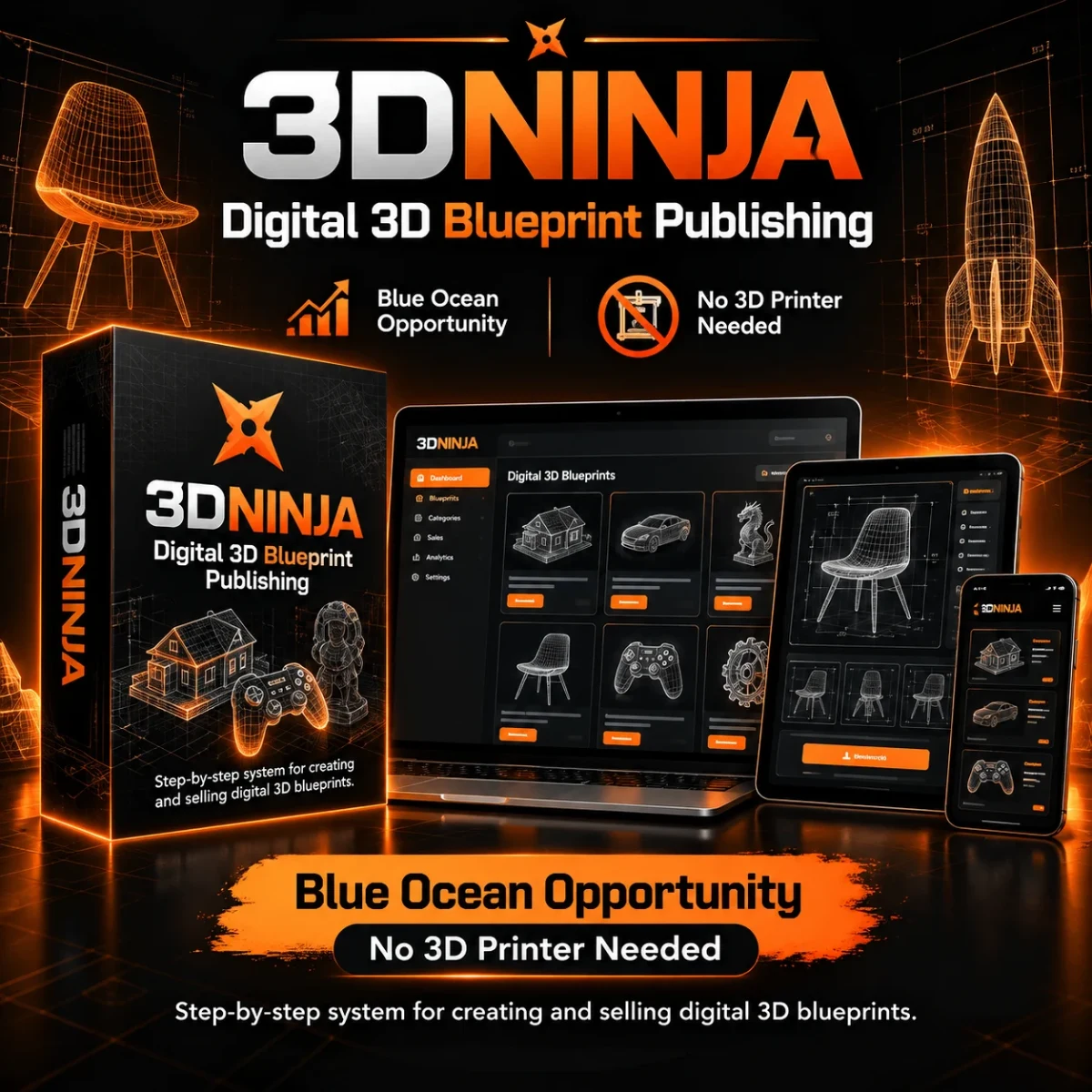
3D Ninja is a digital product aimed at people who want to create or work with 3D content without building everything from scratch. Based on its product lineup, it is organized around a main product, add-on credits, specialty packs and licensing tiers. That setup is common in the software and creative-tools world, where a core product is paired with extras that unlock more usage or more commercial freedom.
A quick honesty note before we go further. Product details like feature lists, export formats and update schedules can change, and they are best confirmed on the official 3D Ninja page. What I can speak to with confidence is the price structure, because that is the part laid out clearly. So this review leans on pricing, packaging and buyer fit rather than making promises about features I can’t verify for you.
Think of 3D Ninja as a toolbox with a few separate drawers. You don’t always need to open every drawer, and knowing which ones matter for your situation is the whole game.
==> Get The Full 3D Ninja Buying <==
3D Ninja Pricing Breakdown
Here is the complete lineup and what each item costs. Having every price in one place makes it much easier to compare your options side by side.
|
Product Name |
Price |
|
3D Ninja Main |
$27.00 |
|
3D Ninja - Credit Pack: 25 Credits |
$9.99 |
|
3D Ninja - Agency License |
$97.00 |
|
3D Ninja - Founder Access |
$298.00 |
|
3D Ninja - Niche Pack + Build-in Studio |
$17.00 |
Notice the spread. The cheapest item is under ten dollars, and the most expensive is just under three hundred. That is a big gap, so let’s walk through each one and talk about who it is really for.
3D Ninja Main – $27
This is the core product and, for most people, the logical starting point. At $27, it sits in impulse-buy territory, which lowers the risk considerably. If you’re curious but not ready to commit a large budget, this is the entry door.
The sensible way to treat the main product is as a test drive. Buy it, use it on one real project, and see whether it genuinely speeds up your work. If it does, everything else in the lineup becomes easier to justify. If it doesn’t, you’ve lost the price of a lunch rather than a month’s rent.
3D Ninja – Credit Pack: 25 Credits – $9.99
Credits are usually the fuel that powers usage-based features. At $9.99 for 25 credits, the math works out to roughly 40 cents per credit. Whether that is cheap or expensive depends entirely on how many credits a single task consumes, which is something you should confirm before buying.
A useful trick here is to figure out your cost per finished result. If one finished item uses a handful of credits, the pack stretches nicely. If one item eats ten or more credits, you’ll burn through 25 quickly and the pack becomes a recurring expense. Either way, it’s a low-risk way to top up without moving to a bigger plan.
3D Ninja – Agency License – $97
The agency license is where the product starts to speak to people who sell services. At $97, it is aimed at freelancers, small studios and marketing agencies who want to use the tool for clients rather than only for themselves.
The big question with any agency-style license is simple: how much can you deliver to clients, and how many projects are you allowed to cover? Read the license terms carefully. If you charge even one client a few hundred dollars for work produced with the tool, a $97 license can pay for itself very fast. If you only do the occasional personal project, it’s probably more than you need.
3D Ninja – Founder Access – $298
Founder access is the premium tier at $298. Offers like this typically bundle early access, extended benefits or priority treatment in exchange for a higher upfront payment. It’s designed for people who are confident they will use the product long term and want the strongest package available.
This is also the option that deserves the most scrutiny. A higher price isn’t automatically a better deal. Ask exactly what is included, whether updates are covered, and how long the access lasts. If you can’t get clear answers, treat it with caution and start with something smaller.
3D Ninja – Niche Pack + Build-in Studio – $17
At $17, this is an affordable add-on that appears to combine a niche-focused pack with a built-in studio element. Add-ons like this are handy when you work in one specific field and want ready-made resources instead of starting from a blank page.
If your work sits in a narrow category, a niche pack can save a surprising amount of setup time. If your projects are all over the place, it may not add much. It’s a small purchase either way, which makes it easy to try.
==> Read The Truth 3D Ninja Today <==
Which 3D Ninja Option Should You Choose?
With five different items on the list, the choice can feel confusing. The easiest way to cut through it is to match your purchase to your actual situation instead of to your ambitions.
If you’re a complete beginner, start with the main product at $27 and nothing else. Use it for a couple of weeks, learn how it behaves, and then decide what to add. Beginners often overbuy because everything looks useful on a sales page.
If you already know you’ll use it regularly, the main product plus the credit pack is a sensible pairing. That combination comes to $36.99, still well under fifty dollars, and gives you both the core tool and some extra capacity.
If you work in a specific niche, adding the $17 niche pack to the main product brings your total to $44. That’s a modest spend for something tailored to your field.
If you serve clients, the main product plus the agency license totals $124. Compared with what you can bill for a single client project, that is a small cost of doing business.
If you want everything, buying every item on the list adds up to $448.99. That is a lot to spend on a tool you haven’t yet tested, so I’d only go this route after you’ve proven the value with the cheaper options first.
Who Is 3D Ninja Best For?
Freelancers and Solo Creators
Freelancers live and die by their time. Anything that shortens the path from idea to deliverable is worth considering, and a low entry price makes 3D Ninja easy to test without hurting your budget. The agency license also gives you room to grow if client work picks up.
Small Agencies and Studios
For agencies, the licensing tier is the headline feature. Being able to use a tool commercially for clients without worrying about a rights issue is worth real money. At $97, the license is priced low enough that a single small project can cover it.
Hobbyists and Beginners
If you’re simply curious about 3D and want something to experiment with, the main product plus a small credit pack is plenty. There’s no need to spend hundreds of dollars on something you’re still learning about.
Entrepreneurs and Marketers
People who run online businesses often need visual assets for product pages, ads and social media. A tool in this category can help you produce eye-catching content without hiring a designer for every little task, which adds up quickly over a year.
Potential Benefits of 3D Ninja
Let’s talk about what makes this kind of product attractive, based on how it’s packaged and priced.
The first benefit is the low barrier to entry. A $27 starting price is easy to say yes to, and that matters. Many software tools in the creative space demand monthly subscriptions that quietly drain your bank account. A one-time style price, if that’s how it’s structured for you, feels much friendlier.
The second benefit is flexibility. Because the lineup is split into separate offers, you only pay for what you need. You don’t have to buy a giant bundle just to access one feature. That modular approach respects different budgets and different goals.
The third benefit is the clear path to commercial use. Having a dedicated agency license means the product acknowledges that some customers are making money with it. That clarity is reassuring, because unclear licensing is one of the biggest headaches in the creative-tools world.
The fourth benefit is the niche option. Specialized packs save time for people who work in a focused area. Instead of building everything on your own, you start from something closer to the finish line.
==> Click Here to Get 3D Ninja + Bonus at a Discount Price <==
Possible Drawbacks to Consider
No honest review is complete without the downsides, so here are the things I’d think carefully about.
First, the pricing can get confusing. With five separate items, it’s easy to lose track of what you actually need. Some buyers will end up spending more than expected simply because every add-on sounds helpful. My advice is to write down your goal first and buy only what supports it.
Second, credits can become an ongoing cost. If your workflow depends heavily on credits, the $9.99 packs will keep coming back. Over a busy month, that can add up, so estimate your usage early.
Third, the founder tier is a big jump. Going from $97 to $298 is a serious step up, and the extra value needs to be crystal clear. If the benefits are vague, that money is better kept in your pocket or spent on the cheaper options.
Fourth, results depend on your skill and your needs. No tool does the work for you. Even the best software needs a person with taste and good judgment behind it. If you expect magic with zero effort, you’ll probably be disappointed.
Finally, always verify the details on the official page. Features, terms and bonuses can change, and a review can’t replace reading the current offer yourself.
How to Get the Most Value From 3D Ninja
Buying a tool is the easy part. Actually getting value from it takes a little planning, so here are a few habits that make a real difference.
Start with one real project. Don’t spend your first week watching tutorials and clicking around aimlessly. Pick something you genuinely need, such as a product visual, a client mockup or a social media graphic, and build it from start to finish. Real deadlines teach faster than any course.
Track your time. Before using the tool, note how long a similar task normally takes you. Then compare. If you consistently save time, you have your answer. If you don’t, you’ll know that too.
Be careful with credits. Treat them like cash. Plan what you want to create before you spend them, and avoid random experiments that burn through your balance with nothing to show for it.
Keep your licensing in order. If you work with clients, save a copy of your license details and confirm what is covered. It takes five minutes and can spare you a lot of stress later.
Finally, upgrade only when you hit a real limit. The best reason to buy a bigger package is that you ran into a wall with the smaller one, not that a sales page made the bigger one sound exciting.
Is 3D Ninja Worth the Money? A Simple Cost Analysis
Let’s put some numbers on this. The main product costs $27. If you bill even $50 for one small job where the tool helps, you’ve covered the cost with room to spare. That’s the kind of simple return that makes low-priced tools appealing.
The agency license at $97 is a slightly bigger bet, but the logic is the same. One modest client project can cover it, and everything after that is profit. For a working freelancer, the real risk isn’t the price. It’s buying the license and never using it.
Founder access at $298 needs a longer view. To justify it, you’d want to be confident that you’ll rely on the product for many months and that the extra benefits are meaningful to your work. If you’re not sure, the smarter play is to begin with the main product, see how it fits, and revisit the founder tier later if it still makes sense and is still available.
Here is a quick way to think about value. Ask yourself three questions. How many hours will this save me each month? What is an hour of my time worth? And how long will it take to earn back the purchase price? If you can answer those honestly, the decision usually becomes obvious.
Questions to Ask Before You Buy
A little homework goes a long way. Before checking out, make sure you have clear answers to the following.
What exactly is included in each package? Look past the headline and read the fine print. Check whether updates, support and future features are covered.
What does the license allow? Personal use and client use are very different things. Confirm whether you can deliver work to customers and whether there are limits on the number of projects.
How many credits does a typical task use? This single detail tells you whether the credit pack is a bargain or a treadmill.
Is there a refund policy? A fair refund window lowers your risk dramatically. If one exists, note the deadline in your calendar so you can test the product properly before it passes.
What support is available? When something goes wrong at midnight before a deadline, responsive help matters more than any feature.
3D Ninja Compared to Other Ways of Getting 3D Work Done
It helps to see the bigger picture. There are generally three ways to get 3D content. You can learn professional software and build everything yourself, which gives you full control but takes a long time to master. You can hire a freelancer or studio, which saves your time but costs more per project. Or you can use a ready-made tool that speeds things up, which sits somewhere in the middle.
A product like 3D Ninja belongs to that third group. Its low entry price makes it a cheap experiment compared with hiring someone, and it doesn’t demand months of training the way traditional software does. The trade-off is that you work within the limits of whatever the tool offers. For many everyday needs, that’s a perfectly fine deal. For highly custom, high-end work, you may still want a professional.
So the real question isn’t whether 3D Ninja replaces everything else. It’s whether it covers enough of your needs at a price that makes sense. For a lot of small businesses and solo creators, a tool in this price range can be a smart, practical piece of the puzzle.
Final Verdict: Should You Buy 3D Ninja?
After looking at the full lineup, my take is straightforward. 3D Ninja is priced in a way that makes experimenting easy. At $27 for the main product, it’s an inexpensive way to find out whether the tool fits your workflow. The smaller add-ons, the $9.99 credit pack and the $17 niche pack, are low-risk extras that you can add as needed.
The agency license at $97 makes good sense for anyone who sells services, as long as you read the terms and use it on real client work. The founder access at $298 is the one that calls for the most caution. Unless you’re certain about what’s included and you’re sure you’ll use the product heavily, I’d start smaller.
My honest recommendation is to begin with the main product, put it to work on a real project, and let your results guide any upgrades. That approach protects your budget and keeps your decisions grounded in experience instead of excitement.
Before you buy, spend a few minutes on the official page to confirm the current features, terms and any refund policy. A smart purchase is an informed one, and a quick check now can save you a headache later.
Frequently Asked Questions (FAQs)
How much does 3D Ninja cost?
The main product costs $27. Add-ons include a $9.99 credit pack, a $17 niche pack with Build-in Studio, a $97 agency license and a $298 founder access tier.
Which 3D Ninja plan is best for beginners?
The $27 main product is the best starting point. Test it on a real project first, then add extras only if you need them.
Is the agency license worth $97?
It can be, if you deliver work to clients. One small paid project can cover the cost. For personal use only, it’s likely unnecessary.
What are credits used for in 3D Ninja?
Credits are the usage units sold in packs of 25 for $9.99. Check the official page to see how many credits each task consumes.
Should I buy Founder Access right away?
Probably not. Start with the cheaper options, confirm exactly what Founder Access includes, and upgrade only once you’re sure you’ll use it long term.